
Is Eggnog Keto? Carbs in Eggnog and the Low Carb Swap
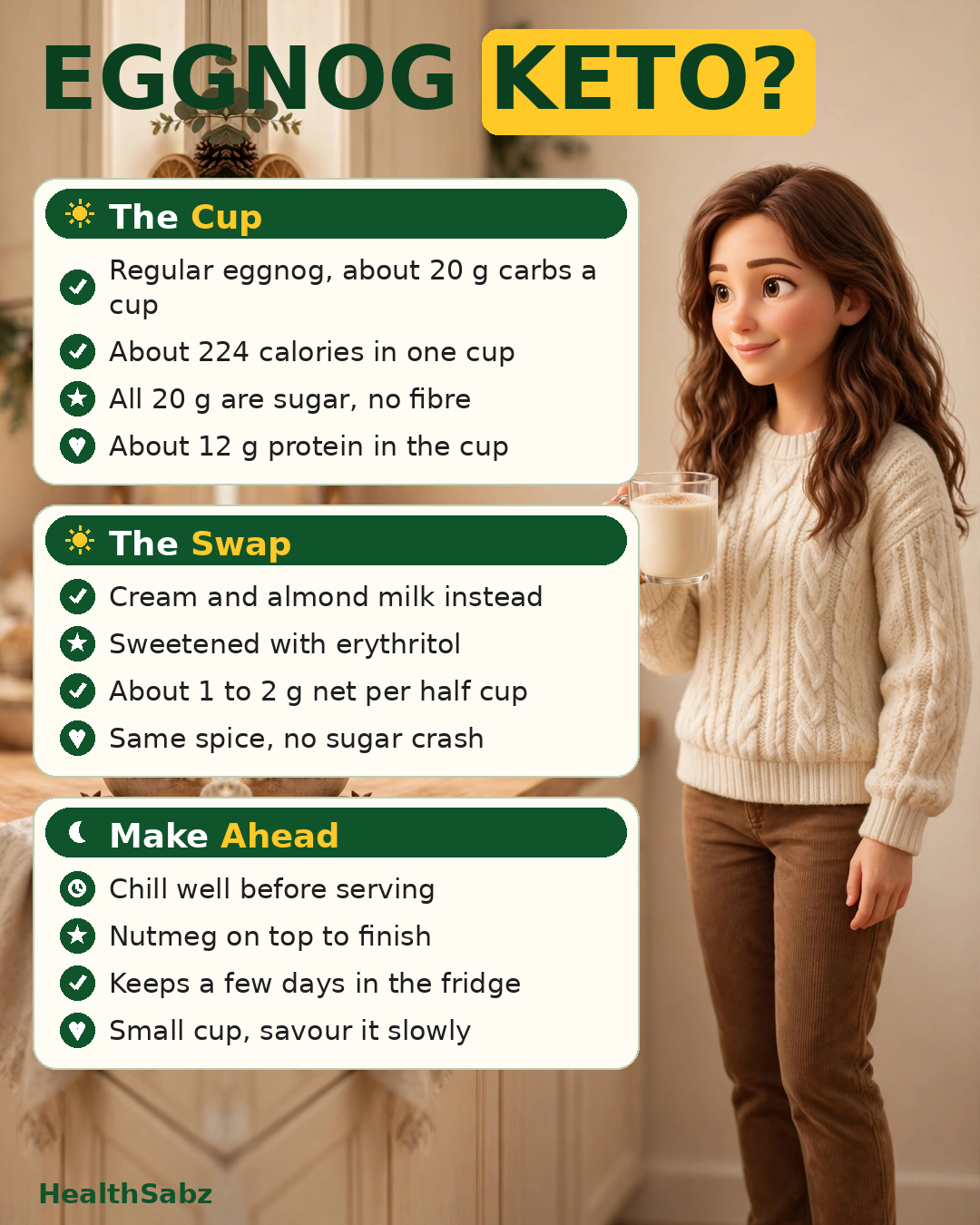
Short answer: classic eggnog is not keto, but a homemade low carb version absolutely is. The drink itself is built on the right ingredients: eggs, cream and spice. The problem is the sugar and the milk. A cup of classic eggnog carries about 20 grams of carbs in the plain USDA version and about 40 to 48 grams in most sweetened store bought cartons, which is close to a full day of carbs for many keto eaters. Swap the sugar for a keto sweetener and the milk for heavy cream, and the same cup lands near 2 to 3 grams of net carbs.
How Many Carbs Are in Eggnog?
The numbers below use net carbs, which is total carbohydrate minus fiber, and come from USDA FoodData Central and standard product labels. Recipes and brands vary, so treat the figures as honest averages, not lab results.
| Eggnog type | Serving | Net carbs | Calories |
|---|---|---|---|
| Plain eggnog, USDA standard | 1 cup | About 20 g | About 224 |
| Store bought sweetened eggnog | 1 cup | About 40 to 48 g | About 340 to 400 |
| Store bought sweetened eggnog | 1/2 cup | About 20 to 24 g | About 170 |
| Store bought light eggnog | 1/2 cup | About 15 to 17 g | About 120 |
| Keto homemade eggnog | 1 cup | About 2 to 3 g | About 300 |
| Keto eggnog, almond milk version | 1 cup | About 2 g | About 200 |
The spread matters more than any single number. The plain USDA eggnog is an unsweetened style made mostly from milk and eggs, so its carbs are nearly all milk sugar, called lactose. The cartons in the shops are sweeter still: most list about 20 to 24 grams of carbs in a half cup serving, and a full cup doubles that. Light eggnog is a little lower, but it is still sweetened, so it is not a keto drink either.
Why Classic Eggnog Is Not Keto
Eggnog has three carb sources, and two of them are easy to miss. The first is added sugar: a classic recipe stirs in about half a cup of sugar for every four cups of liquid. The second is milk. Whole milk carries about 12 grams of carbs per cup, all of it lactose, and most recipes use more milk than cream. The third is the egg yolk, but yolks are nearly carb free at about half a gram each, so they are not the problem.
That combination is why a small glass can still break a keto day. A half cup of store bought eggnog, which looks like a modest pour, carries about 20 to 24 grams of net carbs. Most keto eaters aim for about 20 to 50 grams of net carbs for the whole day, so one small glass can use up the entire budget.
Alcohol does not fix it either. A splash of bourbon or rum adds almost no carbs on its own, but it does not cancel the sugar already in the glass. It also slows fat burning while the body deals with the alcohol first, so a spiked classic eggnog is a double problem on keto. If you want a spiked version, spike the keto recipe below instead.
The Keto Eggnog Recipe
This recipe makes about four cups, or four small servings, and takes about fifteen minutes plus chilling time.
Ingredients. 4 egg yolks, 2 cups of heavy cream, 1 cup of unsweetened almond milk, 1/3 cup of powdered erythritol or monk fruit blend, 1 teaspoon of vanilla extract, 1/2 teaspoon of ground nutmeg plus extra for dusting, and a pinch of cinnamon.
Step 1: whisk the yolks and sweetener. Whisk the yolks with the sweetener in a saucepan until the mixture turns pale and slightly thick, about two minutes. Powdered sweetener works best here because granulated sweetener can feel gritty in a cold drink.
Step 2: warm the cream. Heat the cream and almond milk in a second pan until it is hot but not boiling, with small bubbles at the edge. Pour it into the yolk mixture slowly, whisking all the time, so the yolks warm gently instead of scrambling.
Step 3: thicken on low heat. Put the pan back on low heat and stir with a wooden spoon until the mixture coats the back of the spoon, about five minutes. Do not let it boil. Take it off the heat, stir in the vanilla, nutmeg and cinnamon, and let it cool.
Step 4: chill and serve. Chill for at least two hours, or overnight for the best flavour. Pour into small glasses, dust with nutmeg, and serve cold. A cup lands at about 2 to 3 grams of net carbs, and the texture is thick and rich because the cream does the work the sugar used to do.
Two tips that matter. First, use pasteurised eggs or heat the mixture properly, as above, because this recipe uses yolks that are only gently cooked. Second, if the eggnog thickens too much in the fridge, thin it with a splash of almond milk before serving. It keeps about three days in a sealed jug.
Store Bought Low Carb Eggnog: What to Look For
A few brands now sell sugar free eggnog, and they can work if the label checks out. Read the nutrition panel before you buy: look for 2 grams of net carbs or fewer per half cup, and check the ingredient list for the sweetener used. Erythritol, monk fruit and stevia are the safe choices. Maltodextrin is the one to avoid, because it raises blood sugar almost like sugar even though it is listed as a sweetener.
Watch the serving size too. Eggnog cartons usually list a half cup serving, which is a small pour, and the front of the carton may say low carb while the panel tells a different story at a full cup. If the label shows more than 5 grams of net carbs per half cup, it is not a keto drink, whatever the front says.
If you cannot find a sugar free carton, the homemade recipe above is the better buy: it takes fifteen minutes and you know exactly what went into it.
How to Serve Eggnog at Christmas on Keto
Eggnog is a party drink, so the serving matters as much as the recipe. Use small glasses, about half a cup each, and serve it as the evening drink rather than an all day refill. A half cup of the keto version is about 1 to 2 grams of net carbs, so even two small glasses stay inside a keto day, while two glasses of the classic version would end it.
Pair it with food that is already on the table. Keto eggnog goes well with the almond shortbread and keto gingerbread cookies from our Christmas dessert list, and it works as the drink next to a cheese board, where the salt balances the sweetness.
One last note on alcohol: if you spike the keto version, use bourbon, rum or brandy, which carry almost no carbs, and skip sweet liqueurs and flavoured vodkas, which add sugar back in. Keep the pour small, one shot per glass.
A quick note: this article is general information about the carbohydrate content of common foods, not medical advice. If you manage a health condition or take medication, talk to your doctor or dietitian before changing how you eat.
Related reading: Keto Christmas Desserts: 10 Low Carb Sweets for the Holiday Table · Keto Christmas Side Dishes: 10 Low Carb Sides for the Holiday Table
Frequently Asked Questions
Is eggnog keto friendly?
Classic eggnog is not keto, because a cup carries about 20 grams of net carbs in the plain USDA version and about 40 to 48 grams in most store bought cartons. A homemade keto version made with heavy cream, egg yolks and a keto sweetener is keto friendly at about 2 to 3 grams of net carbs per cup.
How many carbs are in a cup of eggnog?
It depends on the type. Plain eggnog has about 20 grams of net carbs per cup, most sweetened store bought cartons have about 40 to 48 grams per cup, and light eggnog has about 30 to 34 grams per cup. A keto homemade version has about 2 to 3 grams per cup.
Can I drink eggnog on keto at Christmas?
Yes, if it is the keto version. A half cup serving of homemade keto eggnog is about 1 to 2 grams of net carbs, so it fits easily into a keto day. The classic version does not fit, because even a half cup uses about 20 to 24 grams of net carbs.
What is the best low carb sweetener for eggnog?
A powdered erythritol and monk fruit blend is the best choice, because it dissolves smoothly in a cold drink and measures close to sugar. Use the powdered form rather than granulated, so the eggnog feels silky instead of gritty. Avoid maltodextrin, which raises blood sugar almost like sugar.