Is Kefir Good for Weight Loss? What the One Real Trial Found
Kefir can help with weight loss, but not in the way most headlines suggest. It is a low calorie, high protein fermented milk drink that fits easily into a calorie controlled diet. But the one randomised trial that compared kefir directly with plain milk found both groups lost similar amounts of weight. Kefir did not beat milk.
A cup of plain low fat kefir has about 104 calories and about 9 grams of protein, a useful breakfast or snack. Plain kefir is a good choice inside a weight loss diet, but there is no evidence it burns fat or targets belly fat. Flavoured kefir can carry about 50 extra calories and far more sugar per cup, which can quietly cancel the benefit.
What Kefir Is, and How It Differs From Yogurt
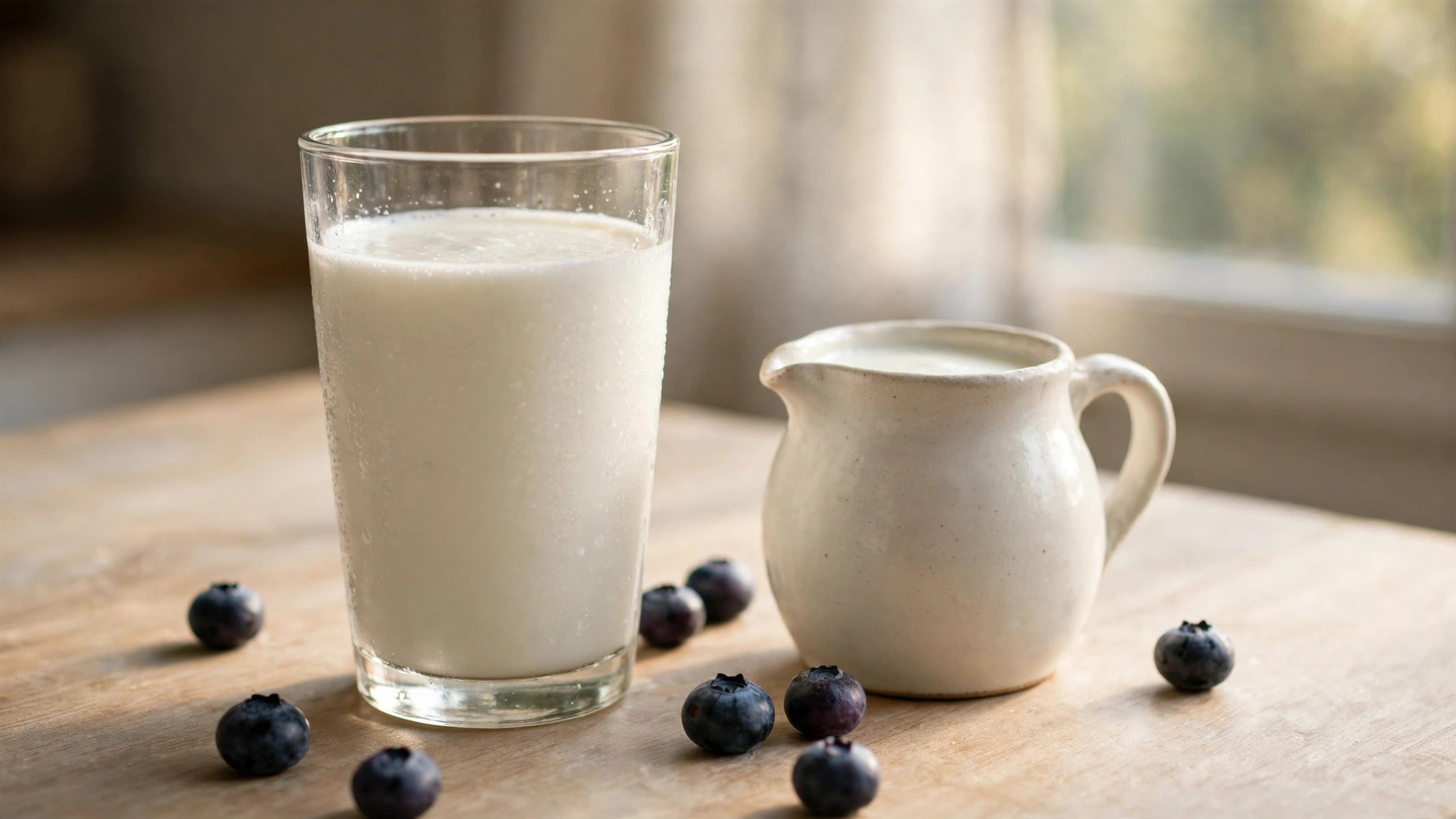
Kefir is a fermented milk drink, traditionally made by adding kefir grains to fresh milk. Kefir grains are not grains at all, but a community of bacteria and yeasts held together in a soft, jelly like matrix called kefiran. The microbes ferment the milk, partly breaking down its lactose, leaving a thin, tangy drink that tastes sharper than yogurt.
Yogurt is fermented with fewer cultures, usually just two or three strains, and sets into a thick spoonable food. Kefir typically contains a wider range of bacteria plus yeasts, hence its broader probiotic reputation. But more microbes does not mean more weight loss.
The practical differences matter more. Kefir is drinkable, so it suits smoothies and overnight oats, and it is often easier to digest than milk, because fermentation has already broken down some of the lactose. Greek yogurt is thicker and much higher in protein, so it is more filling spoon for spoon.
Kefir Nutrition: What Is in a Cup
The numbers below are per cup, using USDA FoodData Central entries. A cup of kefir weighs about 243 grams, while a cup of Greek yogurt weighs about 227 grams. All figures are approximate, so the label on your bottle is the final word.
| Food, per cup | Calories | Protein | Carbohydrates | Fat |
|---|---|---|---|---|
| Plain low fat kefir | About 104 | About 9 g | About 12 g | About 2.5 g |
| Plain nonfat Greek yogurt | About 134 | About 23 g | About 8 g | About 1 g |
| Low fat milk (1%) | About 102 | About 8 g | About 12 g | About 2.5 g |
Two things stand out. First, plain kefir and low fat milk are almost identical on calories, protein and carbs, so it is no surprise they deliver similar weight loss. Second, Greek yogurt is the protein winner, with about two and a half times the protein of kefir for only about 30 extra calories. Kefir also provides about 316 mg of calcium per cup.
What the Trial Actually Showed
The best human evidence comes from a randomised controlled trial published in 2016 in the European Journal of Nutrition, led by Yasamin Fathi and colleagues. It is the only trial that directly compared kefir with plain milk for weight loss.
Seventy five overweight or obese premenopausal women, aged 25 to 45, were randomly assigned to three groups for eight weeks. The control group ate a weight maintenance diet with two servings of low fat dairy a day. The milk and kefir groups ate the same diet, plus two extra servings a day of low fat milk or commercial kefir. The diets were not energy restricted. Weight, body mass index and waist circumference were measured every two weeks, and 58 of the 75 women finished the study.
At eight weeks, both the kefir group and the milk group had lost significantly more weight, and had greater reductions in body mass index and waist circumference, than the control group. But there was no significant difference between the kefir group and the milk group. Kefir led to similar weight loss to milk, not more.
The trial was small, lasted only eight weeks, studied only premenopausal women, and tested added dairy on a maintenance diet, not kefir inside a calorie restricted plan. It is still the strongest direct evidence we have, and it does not support the claim that kefir is a superior weight loss food.
Why People Still Think Kefir Helps
Protein and fullness come first. About 9 grams of protein per cup is a reasonable amount for a drink, and protein is the most filling of the three macronutrients. A kefir breakfast is likely to keep you full longer than a lighter breakfast at the same calories. That is a real mechanism, but it is not unique to kefir.
Gut health is the second reason. Kefir contains live cultures, and a healthy gut microbiome is linked in research to better digestion and metabolic health. But the step from healthier gut markers to actual kilograms lost has not been shown in humans for kefir. The one trial that measured weight directly found no advantage.
Flavoured Kefir Can Cancel the Benefit
Plain kefir is a low calorie food. Flavoured kefir often is not. The difference is added sugar, and it is large enough to change the food entirely.
A cup of strawberry kefir from a major brand carries about 153 calories and about 20 grams of carbohydrate, against about 104 calories and about 12 grams of carbohydrate for the plain version. That is roughly 50 extra calories and 8 extra grams of sugar per cup, every cup. Over a daily habit, that adds up to about 350 extra calories a week, which is enough to slow or stall a modest weight loss plan.
The fix is simple, and it is the same rule that applies to yogurt. Buy plain, unsweetened kefir, and flavour it yourself. A handful of berries, half a sliced banana, a spoonful of oats, or a few drops of vanilla add flavour for far fewer calories than the sweetened bottle. Check the label: if the sugars line reads much above 12 grams per cup, it is a sweetened product, not a plain one.
How to Use Kefir for Weight Loss
Kefir works best as a swap, not as an addition. The goal is to replace something heavier, not to add calories on top of what you already eat. Used that way, plain kefir is a useful tool.
Start with portion. One cup a day, about 240 ml, is a sensible serving. A full bottle is often about four cups, so pouring from the bottle without measuring can quietly turn a 104 calorie snack into a 400 calorie drink. Measure it, at least for the first week.
Use it as a breakfast or a snack. A cup of plain kefir with oats and berries makes a filling breakfast at roughly 250 to 300 calories. As an afternoon snack, a cup of plain kefir with a small handful of nuts is more filling than a biscuit or a packet of crisps at similar calories.
Pair it with protein and fibre rather than relying on it alone. Kefir has about 9 grams of protein, which is good for a drink but modest next to a meal. Adding an egg, a spoonful of nut butter, or a serving of oats alongside it builds a breakfast that keeps you full for hours. What changes weight is the total pattern of what you eat across the day, and kefir is one small, sensible piece of that pattern.
Talk to your doctor first if you take medication or have a weakened immune system.
Related reading: Why Does Yogurt Upset My Stomach? and Why Does Greek Yogurt Make My Mouth Dry?
Is Kefir Good for Weight Loss Frequently Asked Questions
Is kefir good for weight loss?
Plain kefir can support weight loss in a calorie controlled diet, because it is low in calories and provides about 9 grams of protein per cup. But the best human trial found it no better than plain milk. It is a good choice, not a superior one.
Does kefir burn belly fat?
No food burns belly fat specifically, and kefir is no exception. The randomised trial comparing kefir with milk found similar weight and waist reductions in both groups, with no advantage for kefir. Fat loss happens across the body when total calories are lower than total calories burned.
How much kefir should I drink a day for weight loss?
One cup a day, about 240 ml, is a sensible serving. It provides about 104 calories and about 9 grams of protein. Measure it rather than drinking from the bottle, since a full bottle can hold about four cups.
Is flavoured kefir good for weight loss?
Flavoured kefir is a much weaker choice than plain. A cup of strawberry kefir has about 153 calories and about 20 grams of carbohydrate, against about 104 calories and about 12 grams for plain. Buy plain, unsweetened kefir and add your own fruit for flavour.
Share this:

Follow HealthSabz on Facebook
Daily keto tips, recipes and healthy eating ideas, posted every day.
Follow HealthSabz