Leftover Turkey: How Long It Lasts and 5 Healthy Ways to Use It
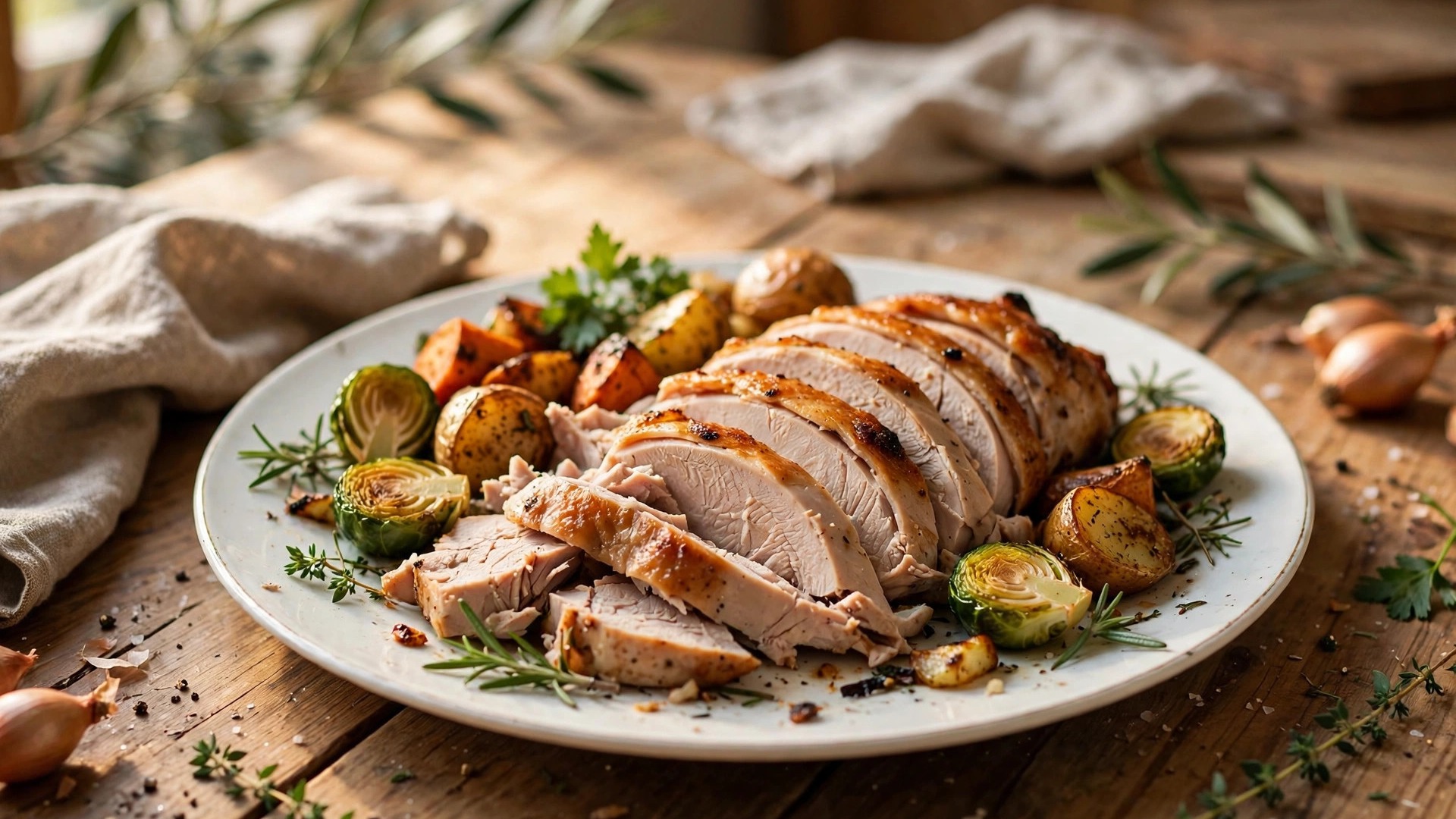
Cooked turkey lasts 3 to 4 days in the fridge. That is the figure in the US food safety storage chart for cooked poultry, and it assumes a fridge at 40 degrees Fahrenheit (4 degrees Celsius) or below. After day 4, the safe move is to throw it away, even if it still looks and smells fine, because the bacteria that cause food poisoning do not always change how food looks or smells.
The good news is that 3 to 4 days is plenty of time to use turkey well. Turkey is one of the leanest proteins you can have left over: roasted breast is about 147 calories and about 30 grams of protein per 100 grams, according to USDA FoodData Central. The trick is storing it right on day one, reheating it properly, and turning it into meals that do not feel like the same plate reheated. This post covers the storage times for every kind of leftover, the safety rules that matter, and 5 healthy ways to use the turkey up.
How Long Does Leftover Turkey Last?
The clock starts when the turkey comes out of the oven, not when you put it in the fridge. Cooked turkey should go into the fridge within 2 hours of cooking, or within 1 hour if the room is warm. Every item below follows the same 3 to 4 day fridge rule, but the freezer times differ.
| Leftover | Fridge | Freezer |
|---|---|---|
| Cooked turkey, plain pieces | 3 to 4 days | About 4 months |
| Cooked turkey in broth or gravy | 3 to 4 days | About 6 months |
| Turkey soup or stew | 3 to 4 days | About 2 to 3 months |
| Turkey casserole | 3 to 4 days | About 4 to 6 months |
| Gravy on its own | 1 to 2 days | About 2 to 3 months |
| Stuffing, cooked separately | 3 to 4 days | About 1 month |
Gravy is the item most people get wrong. It only keeps 1 to 2 days in the fridge, so if you are not going to use it by the second day, freeze it or throw it away. Stuffing is the other one to watch: stuffing cooked inside the bird should be removed and stored separately, and it keeps about 1 month in the freezer, much less than the turkey itself.
If you will not finish the turkey within 4 days, freeze it on day one or two, while it is still fresh. Frozen turkey keeps its quality for about 4 months as plain pieces, and longer in broth or gravy because the liquid protects it from drying out. Label the bag or container with the date so you are not guessing later.
How to Store Leftover Turkey Safely
Good storage starts before the fridge. Carve the turkey off the bone first, because a whole bird cools slowly and the centre can stay warm long enough for bacteria to grow. Slice or shred the meat, then pack it into shallow containers so it cools fast. Deep containers are the enemy here: the middle stays warm while the outside chills.
Keep the fridge at 40 degrees Fahrenheit (4 degrees Celsius) or below. If you are not sure of your fridge temperature, a cheap fridge thermometer settles the question, and it is worth having in the days after a big holiday meal when the fridge is full and the door keeps opening.
Do not leave turkey out on the counter to cool for hours. Two hours is the limit, and that includes the time it spent on the table during the meal. If the turkey sat out through a long dinner, that time counts. When in doubt, the safe choice is to refrigerate early and reheat well, rather than to leave food out and hope.
One more rule: do not put hot turkey straight into a sealed container in the fridge. Let it cool for a short while, then pack it. And keep raw meat far away from the leftovers. If you are still working through raw ingredients for other dishes, the cooked turkey should sit on a shelf above them, never below where juices could drip.
How to Reheat Leftover Turkey
Reheat leftover turkey to 165 degrees Fahrenheit (74 degrees Celsius) all the way through. That is the temperature that kills the bacteria that can grow during storage, and a food thermometer is the only reliable way to check it. Microwaves can leave cold spots, so stir or turn the food partway through and let it stand for a minute before eating.
Turkey breast dries out fast when reheated, so add moisture. A splash of broth, stock or water in the pan or container keeps it tender. Cover the dish while it reheats, and use a gentle heat rather than blasting it. In the oven, about 325 degrees Fahrenheit with a covered dish works well. In a pan, low to medium heat with a lid and a little broth does the job in a few minutes.
Only reheat what you are going to eat. Reheating the same turkey again and again is not a good idea: each round of cooling and reheating is another chance for bacteria to grow, and the texture gets worse every time. Take out one portion, reheat that portion, and leave the rest cold in the fridge.
5 Healthy Ways to Use Leftover Turkey
Turkey is a blank canvas, and the healthiest uses are the ones that pair it with vegetables and whole foods instead of more rich sauces. These five all work with either breast or dark meat, and none of them needs a recipe book.
1. Turkey and vegetable soup. This is the best use for the carcass as well as the meat. Simmer the bones with onion, carrot and celery for stock, then add shredded turkey, vegetables and a handful of barley or brown rice. A bowl of turkey soup is light, filling and warm, and it uses up the parts of the bird most people throw away. Soup keeps 3 to 4 days in the fridge, so make it on day 2 or 3.
2. Turkey salad with crunch. Shred cold turkey and toss it with chopped celery, apple, walnuts and a dressing of plain Greek yogurt with a little mustard and lemon. It has the crunch and creaminess of a deli salad with far less fat than a mayonnaise version, and the protein keeps you full. This is also the fastest option: it takes about 10 minutes and no cooking at all.
3. Turkey lettuce wraps. Spoon warm shredded turkey into large lettuce leaves with shredded carrot, cucumber and a drizzle of soy sauce or chilli sauce. The lettuce replaces bread or a wrap, so the meal stays light, and it is a good way to use turkey that has gone slightly dry, because the sauce and the fresh vegetables add the moisture back.
4. Turkey and vegetable stir fry. Slice the turkey and fry it quickly with broccoli, peppers, mushrooms and garlic in a little oil, then finish with soy sauce and ginger. Because the turkey is already cooked, it only needs a couple of minutes in the pan, so the vegetables stay crisp. Serve it over brown rice or cauliflower rice.
5. Turkey and sweet potato hash. Dice leftover turkey and cook it in a pan with diced sweet potato, onion and peppers until the edges crisp. Top with a fried egg if you like. This is the most filling of the five, and it works for breakfast, lunch or dinner. Sweet potato adds fibre and slow energy, which balances the lean protein of the turkey.
Turkey Breast vs Dark Meat: What You Are Actually Eating
Not all turkey is equal. Breast meat is the leanest part of the bird, while dark meat from the legs and thighs carries more fat and more calories. Both are good protein, but the numbers differ enough to matter if you are watching calories.
| Turkey, cooked, per 100 g | Calories (about) | Protein (about) | Fat (about) |
|---|---|---|---|
| Breast meat, roasted, no skin | 147 kcal | 30.1 g | 2.1 g |
| Dark meat, roasted, no skin | About 180 kcal | About 28 g | About 7 g |
| Breast meat with skin | About 190 kcal | About 29 g | About 8 g |
The figures are from USDA FoodData Central, rounded and labelled about. The skin is the biggest single difference: it adds fat without adding protein, so removing it saves roughly 40 calories per 100 grams. That does not mean you must strip the skin off every piece, but if you are eating turkey for several days running, the skinless breast is the lighter choice.
Gravy and stuffing change the picture more than the turkey itself. A spoonful of gravy is not a problem, but a plate swimming in it adds salt and fat fast. The same goes for stuffing made with butter and sausage. The turkey is the healthy part of the plate; the extras are where the calories hide.
Related reading: Keto Christmas Side Dishes: 10 Low Carb Sides for the Holiday Table and Is Turkey Good for Weight Loss? Protein, Calories and the Dark Meat Question.
Leftover Turkey Frequently Asked Questions
How long does leftover turkey last in the fridge?
Cooked turkey lasts 3 to 4 days in the fridge at 40 degrees Fahrenheit (4 degrees Celsius) or below. That applies to plain pieces, turkey in broth or gravy, soup and casseroles. Gravy on its own only lasts 1 to 2 days. After 4 days, throw the turkey away even if it looks and smells fine.
Can you freeze leftover turkey?
Yes, and it freezes well. Plain cooked turkey keeps about 4 months in the freezer, and turkey in broth or gravy keeps about 6 months. Carve it off the bone first, pack it in shallow freezer bags or containers with the air pressed out, and label it with the date. Defrost it in the fridge overnight, never on the counter.
How do you know if leftover turkey has gone bad?
Trust the date first, not your nose. Turkey older than 4 days in the fridge should be thrown away even if it smells fine. Signs that it has turned include a sour or off smell, a slimy texture, or a grey or green tinge. If any of those are present, do not taste it to check. Throw it away.
Can you eat leftover turkey cold?
Yes, cold leftover turkey is safe to eat as long as it has been stored properly and is within the 3 to 4 day window. It was fully cooked and then refrigerated, so eating it cold in a salad or sandwich is fine. If the turkey has been out of the fridge for more than 2 hours, or it is past day 4, do not eat it cold or reheated.
Share this:

Follow HealthSabz on Facebook
Daily keto tips, recipes and healthy eating ideas, posted every day.
Follow HealthSabz