Does Protein Powder Break a Fast? Whey, Plant and the Insulin Answer
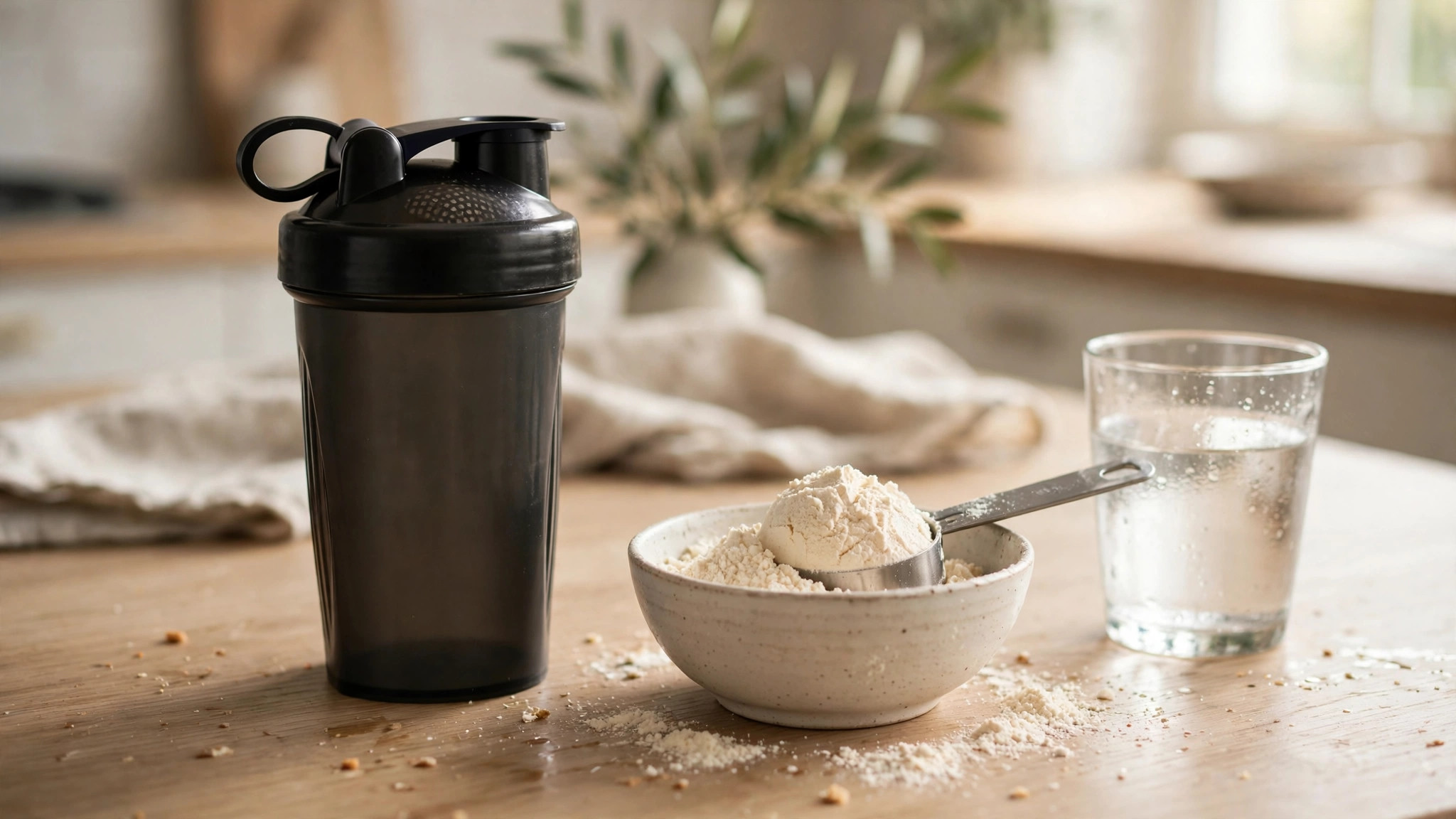
Yes, a protein powder shake breaks a fast, because it contains calories and protein, and protein triggers an insulin response. A scoop of whey or plant protein typically carries about 100 to 130 calories and 20 to 25 g of protein, which is enough to end the fasted state by any standard definition. The real question is not whether it breaks the fast, but whether that matters for your goal, and when to drink it.
For weight loss, a shake at the end of your eating window is a different matter from a shake in the middle of it. For muscle building, the shake is often worth more than the extra hour of fasting. This post works through the insulin answer, the differences between whey, plant and collagen powders, and how to time your shake so it costs you the least.
Why Protein Powder Breaks a Fast
A fast ends when you take in calories, and protein powder is a concentrated source of them. There is no calorie free protein powder, and even the leanest whey isolate carries about 100 calories per scoop. That alone is enough to break a fast in the strict sense.
The second reason is insulin. Protein, and whey protein in particular, stimulates insulin release, because the amino acid leucine is a strong signal to the pancreas. Insulin is the hormone that tells the body to store energy rather than burn it, so a rise in insulin switches off the fat burning state that fasting creates. Whey causes a faster and larger insulin rise than most other proteins, because it digests quickly and floods the blood with amino acids.
That does not make protein powder a bad choice. It makes it a food, and food belongs in the eating window. The fasting benefits that come from low insulin, such as fat burning and cellular cleanup, pause while insulin is raised and resume once it falls again. A single shake does not ruin a day of fasting, it simply ends the fast at that point.
Whey Protein and Fasting
Whey is the most popular protein powder, and the least compatible with fasting. Whey isolate is the leaner version, with about 100 to 120 calories and 20 to 25 g of protein per scoop, and almost no carbs or fat. Whey concentrate is slightly higher in calories and carbs, at about 120 to 130 calories per scoop, because it keeps more of the milk lactose and fat.
Both forms digest fast, which is exactly what makes whey good after a workout and bad during a fast. The amino acids reach the blood within about 30 to 60 minutes, and the insulin response follows the same curve. If you train while fasted and drink whey straight after, the fast ends there, but the workout itself was still done in the fasted state, which is what most people are aiming for.
If your goal is weight loss, the timing matters more than the type. A whey shake taken an hour before your eating window opens is an early end to the fast, but it is not a disaster. A whey shake taken in the middle of a 16 hour fast simply turns the fast into a shorter one. Either way, the calories still count toward the day, and a shorter fast with the same total calories is a smaller effect, not a failure.
Plant Protein Powders
Plant protein powders behave much like whey where fasting is concerned, with a few differences worth knowing. Pea protein is the most common, with about 120 calories and 20 to 24 g of protein per scoop, and it digests more slowly than whey, so the insulin rise is gentler and lasts longer. Rice protein is similar in calories and protein, and many blends combine pea and rice to cover the full range of amino acids.
Soy protein is the closest plant match to whey for muscle building, with about 110 calories and about 20 g of protein per scoop, and a complete amino acid profile. Hemp protein is the outlier, with only about 10 to 15 g of protein per scoop and more fibre and fat, so it is less useful as a protein source but also less likely to spike insulin sharply.
The key point is that no plant protein is calorie free, so none of them fits inside a fast. The slower digestion of pea and hemp protein means a lower insulin peak than whey, but the fast is still broken. If you choose plant protein for other reasons, such as dairy intolerance or taste, keep using it, and simply treat it as food that belongs in the eating window.
Collagen Is the Grey Area
Collagen is the one protein powder that causes genuine debate, because it is different from whey and plant protein in two ways. First, a scoop of collagen peptides carries only about 35 to 45 calories and about 10 g of protein, which is roughly a third of a whey scoop. Second, collagen is an incomplete protein, low in leucine, so it triggers a smaller insulin response than whey.
That smaller response is why some fasting guides allow collagen in coffee during a fast, and why others do not. The honest answer depends on your goal. If you fast for weight loss, a 40 calorie scoop of collagen is unlikely to change the result much, because the calorie load is small. If you fast for autophagy, the cellular cleanup process that depends on low protein intake, then even a small dose of protein may interfere, and plain black coffee or water is the safer choice.
Collagen also deserves a warning. Because it is low in leucine and missing tryptophan, it does not count as a full protein serving for muscle building. It is a supplement for skin, joints and gut support, not a replacement for whey or food protein. If you want the full detail, the collagen post linked below covers the goal by goal answer.
How to Time Your Shake Around a Fast
The simplest rule is to drink your shake when the eating window opens, or within an hour either side. That keeps the fast intact and still gets the protein in when your muscles can use it. For a 16:8 schedule with an eating window from noon to 8 pm, a shake at noon is the natural break fast meal, and it pairs well with a proper lunch an hour later.
If you train fasted in the morning, the choice is between finishing the workout and drinking the shake, which ends the fast early, or waiting until the window opens, which delays the protein. Most people do better drinking the shake after the workout, because the muscle benefit of protein straight after training is better documented than the benefit of one extra hour of fasting. A shorter fast with good protein timing beats a longer fast with a missed recovery window.
Water, black coffee and plain tea are the only drinks that keep a fast going. Anything with calories, including protein powder, flavoured BCAAs and milk in coffee, ends it. If you want to keep the fast going but struggle with hunger, plain sparkling water and black coffee are the honest options, not a low calorie shake.
| Powder | Calories per scoop | Protein per scoop | Insulin response | Fits in a fast? |
|---|---|---|---|---|
| Whey isolate | about 100 to 120 | 20 to 25 g | Fast, strong | No |
| Whey concentrate | about 120 to 130 | 20 to 25 g | Fast, strong | No |
| Pea protein | about 120 | 20 to 24 g | Slower, moderate | No |
| Collagen peptides | about 35 to 45 | about 10 g | Small | Grey area |
| Casein | about 110 | about 24 g | Slow, moderate | No |
The Bottom Line
Protein powder breaks a fast, because it has calories and it raises insulin, and whey raises insulin fastest of all. Plant proteins break a fast too, just more gently. Collagen is the grey area, with a small enough dose that it matters little for weight loss but may matter for a strict autophagy fast. The practical answer is to treat every protein powder as food, drink it when the eating window opens or right after a fasted workout, and keep the fast itself to water, black coffee and plain tea.
Related reading: Does Collagen Break a Fast? The Answer Depends on Your Goal and Fasting Timer.
Does Protein Powder Break a Fast? Frequently Asked Questions
Does whey protein break a fast?
Yes. A scoop of whey isolate has about 100 to 120 calories and 20 to 25 g of protein, and whey triggers a fast insulin rise because of its leucine content. It ends the fasted state, so drink it when the eating window opens or after a fasted workout.
Does plant protein powder break a fast?
Yes. Pea, rice and soy protein powders all carry about 110 to 120 calories per scoop, which is enough to end a fast. They digest more slowly than whey, so the insulin rise is gentler, but the fast is still broken.
Can I have collagen in my coffee while fasting?
It depends on your goal. For weight loss, a scoop of collagen at about 40 calories is unlikely to change the result much. For a strict fast aimed at autophagy, even a small dose of protein may interfere, so plain black coffee is the safer choice.
When is the best time to drink a protein shake on 16:8 fasting?
At the start of the eating window, or straight after a fasted workout. A shake at noon for a noon to 8 pm window breaks the fast cleanly and gets protein in when muscles can use it. Drinking it mid fast simply shortens the fast.
Share this:

Follow HealthSabz on Facebook
Daily keto tips, recipes and healthy eating ideas, posted every day.
Follow HealthSabz