Are Rice Cakes Healthy? Calories, Nutrition and Better Snack Swaps
Short answer: rice cakes are not unhealthy, but they are not a particularly healthy snack either. A plain rice cake is mostly puffed rice and air — low in calories, but also low in fibre, protein and nutrients, and it digests very quickly. Eaten on their own, rice cakes tend to leave you hungry again within the hour. Used as a base for a nutritious topping, though, they can fit perfectly well into a healthy diet.
What Is Actually in a Rice Cake?
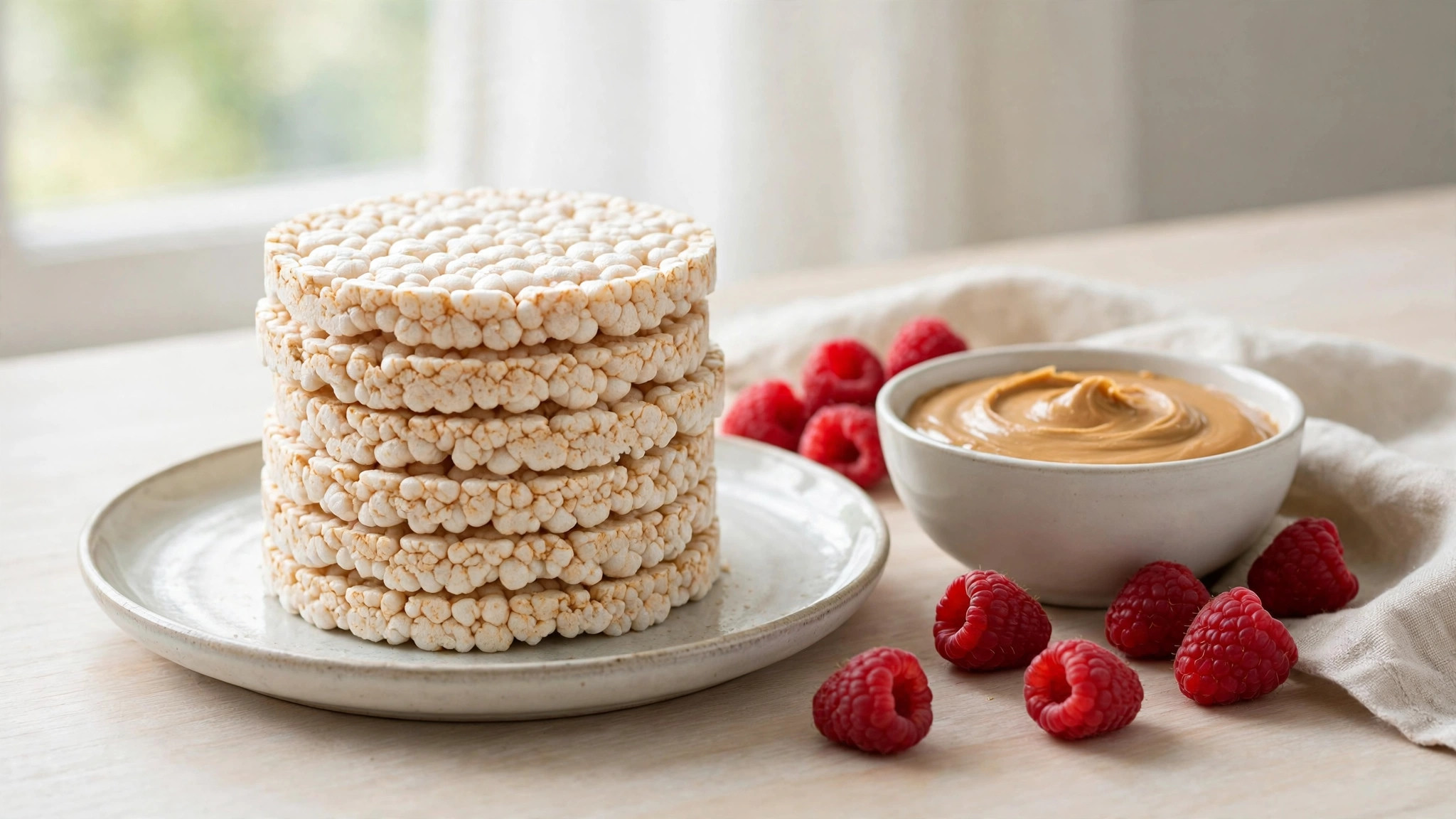
Most plain rice cakes are made from whole-grain brown rice that has been puffed under heat and pressure, sometimes with a little salt. That short ingredient list is a point in their favour — there is nothing artificial in a plain cake. The problem is what is missing rather than what is present.
| Nutrient | Per plain rice cake (about 9 g) |
|---|---|
| Calories | About 35 kcal |
| Carbohydrates | About 7 g |
| Sugars | Less than 0.5 g |
| Fibre | About 0.4 g |
| Protein | About 0.7 g |
| Fat | About 0.3 g |
| Sodium | About 10–30 mg (plain, unsalted versions are lower) |
Two cakes — a more realistic serving than one — come to roughly 70 calories and 14 grams of carbohydrate, with under a gram of fibre. Compare that with a small apple, which has a similar calorie count but around 3–4 grams of fibre plus vitamins and water. The rice cake is not doing anything wrong; it simply does not bring much to the table.
Why Rice Cakes Leave You Hungry
The main issue is speed. Puffing breaks the rice grains down into a light, airy structure that your body digests very fast. Plain rice cakes have a high glycaemic index — commonly estimated around 80 or above — which means their carbohydrate reaches your bloodstream quickly and leaves quickly too.
Satiety, the feeling of being satisfied after eating, depends heavily on fibre, protein, fat and sheer food volume. Rice cakes are low in the first three, and although they look bulky, most of that bulk is air. Studies of snack satisfaction generally suggest that snacks combining protein, fibre and healthy fats keep people fuller for longer than refined-carbohydrate snacks of the same calories. That is why two rice cakes can feel like a snack and yet not behave like one.
There is also a portion trap. Because each cake is so light, eating three or four is easy, and at that point the snack is no longer especially low in carbohydrate — it has just arrived in a less filling form than, say, a sandwich or a bowl of yoghurt.
Are Flavoured Rice Cakes Any Better?
Usually they are slightly worse. Caramel, chocolate, cheese and barbecue-flavoured cakes typically add sugar, salt and flavourings on top of the same puffed-rice base. A flavoured cake may contain 45–60 calories, a gram or two of sugar and noticeably more sodium than a plain one. The differences are not dramatic, but they move the snack in the wrong direction: more sugar and salt, same low fibre and protein.
If you enjoy them, the simple rule is to treat flavoured rice cakes the way you would treat crisps — an occasional snack, not a health food — and to choose plain or lightly salted cakes as your everyday option.
How to Make Rice Cakes a Genuinely Good Snack
The easiest fix is to stop eating them naked. A rice cake is best thought of as an edible plate: a crunchy, low-calorie base that carries more nutritious foods. Toppings that add protein, fat or fibre turn a forgettable snack into a satisfying one:
- Peanut or almond butter with banana slices — adds healthy fats and some protein.
- Hummus with cucumber or grated carrot — adds fibre and plant protein.
- Cottage cheese with cherry tomatoes and black pepper — high in protein for few calories.
- Mashed avocado with a squeeze of lemon and chilli flakes — healthy fats and real staying power.
- A sliced boiled egg — one of the most filling toppings per calorie.
- Tuna or leftover chicken — turns two cakes into a light lunch rather than a snack.
With any of these on top, the rice cake’s weaknesses matter far less, because the topping supplies the nutrients the cake itself lacks.
Better Crunchy Snacks to Swap In
If it is the crunch you love rather than the cake itself, these swaps deliver more nutrition for similar or slightly higher calories:
- Air-popped popcorn — about 31 calories per cup, with real fibre and a much bigger bowl for your calories.
- Raw or dry-roasted nuts — more calories (about 160–170 per small handful), but rich in healthy fats and protein, so a little goes a long way.
- Roasted chickpeas — crunchy, high in fibre and protein, and easy to season at home.
- Vegetable sticks with hummus or guacamole — very high volume and fibre for the calories.
- Whole-grain crackers with cheese — more fibre and protein than a plain rice cake, and more satisfying.
- Edamame — one of the most protein-rich crunchy snacks you can buy.
None of this makes rice cakes a food to fear. They are a neutral, convenient base — roughly as healthy as what you put on them. Plain cakes with a good topping are a reasonable snack; plain cakes alone are mostly a placeholder that your stomach will forget quickly.
Related reading: Are Goldfish Healthier Than Chips? · Is Popcorn Good For Losing Weight?
Frequently Asked Questions
How many calories are in a rice cake?
A plain rice cake has about 35 calories. Flavoured versions such as caramel or cheese typically have 45–60 calories each because of added sugar, oil and flavourings.
Are rice cakes good for weight loss?
They can help as a low-calorie base for filling toppings, but on their own they are a weak weight-loss snack: the low fibre and protein mean hunger returns quickly, which may lead to eating more later. Pairing them with protein or healthy fats makes them far more useful.
Are brown rice cakes healthier than white rice cakes?
Slightly. Brown rice cakes keep a little more fibre and trace minerals from the whole grain, but the difference is small — both are still mostly quick-digesting carbohydrate, so toppings matter more than the choice between them.
Do rice cakes spike blood sugar?
They can raise blood sugar fairly quickly because they are high on the glycaemic index and low in fibre. Eating them with protein, fat or fibre — such as peanut butter or hummus — slows that rise considerably.