Is Cottage Cheese Good for Weight Loss? Protein, Calories and Best Ways to Eat It
Yes, cottage cheese can be a good food for weight loss, as long as you watch the portion and pick the right tub. Low-fat cottage cheese gives you about 14 grams of protein for about 81 calories in a half cup serving, according to USDA FoodData Central. That is a lot of protein for very few calories, and protein helps you feel full. It will not cause weight loss on its own, but it is one of the easiest high protein foods to add to your diet.
The catch is that the tub makes it easy to overeat. A standard tub holds about 2 cups, which is four servings, not one. Eat the whole tub as a snack and you have had about 325 calories and about 56 grams of protein: a meal, not a snack. Flavoured tubs add sugar too, so cottage cheese works best when it is plain, low-fat, and measured out.
What Is in Cottage Cheese? The Nutrition Numbers
Cottage cheese is a fresh cheese made from milk curds, and its nutrition depends mostly on the fat level of the milk. The figures below come from USDA FoodData Central, per half cup (about 113 grams, the standard serving size).
Low-fat cottage cheese made with 1% milk has about 81 calories, about 14 grams of protein, about 3 grams of carbohydrate and about 1 gram of fat per half cup. Full-fat creamed cottage cheese has about 111 calories, about 13 grams of protein, about 4 grams of carbohydrate and about 5 grams of fat. The 2% version sits in between, at about 92 calories and about 12 grams of protein, and nonfat has about 81 calories and about 12 grams of protein.
The protein barely changes between the types, while the calories climb as the fat rises, so the low-fat tub gives almost the same protein for about 30 fewer calories per serving. The carbohydrate count is low in the plain versions, about 3 to 4 grams per half cup, mostly the natural milk sugar lactose. Cottage cheese is also a source of calcium and vitamin B12, and it is mostly casein, a slow-digesting protein that may help you feel full.
Watch the sodium, though: low-fat cottage cheese has about 406 milligrams per 100 grams, so if you eat it daily, keep the portion to half a cup and balance the rest of the day with lower salt foods.
Protein per Calorie: How Cottage Cheese Compares
For weight loss, protein per calorie matters more than protein alone: a food that gives you a lot of protein for few calories helps you stay full while keeping your total intake down. The table below compares cottage cheese with three other common high protein foods, per 100 grams (USDA FoodData Central).
| Food (per 100 g) | Calories | Protein | Protein per 100 calories |
|---|---|---|---|
| Cottage cheese, low-fat 1% | About 72 | About 12.4 g | About 17 g |
| Greek yogurt, plain nonfat | About 59 | About 10.2 g | About 17 g |
| Egg, whole, large | About 143 | About 12.6 g | About 9 g |
| Chicken breast, cooked, skinless | About 165 | About 31 g | About 19 g |
Cottage cheese matches plain nonfat Greek yogurt, at about 17 grams of protein per 100 calories for both. Chicken breast edges ahead at about 19 grams, while a whole egg trails at about 9 grams, because the yolk adds fat and calories. Cottage cheese also needs no cooking or planning, and a half cup with fruit takes about a minute to put together.
Low-Fat vs Full-Fat vs Flavoured: Which Tub to Buy
For weight loss, the low-fat tub is usually the best choice: it saves about 30 calories per half cup, or about 200 calories a week if you eat it most days, for the same amount of protein. Full-fat is not a bad food, and its extra fat can make it more satisfying, but if calories are the priority, the low-fat tub wins.
Flavoured tubs are the ones to be careful with. A fruit-flavoured cottage cheese, such as pineapple, has about 97 calories and about 11 grams of protein per 100 grams, with about 4.6 grams of carbohydrate against about 3.4 grams for plain full-fat, and the sugar is usually added sugar rather than the natural lactose in plain cottage cheese. Some branded fruit tubs are worse, with about 7 grams of carbohydrate and under 10 grams of protein per 100 grams, so check the sugar line.
A simple rule: buy plain, low-fat or nonfat cottage cheese, and add your own flavour at home with fresh fruit, herbs or spices. That way you control the sugar and get the full protein for fewer calories. If you dislike plain cottage cheese, the 2% version is a reasonable middle ground, at about 92 calories and about 12 grams of protein per half cup.
Best Ways to Eat Cottage Cheese for Weight Loss
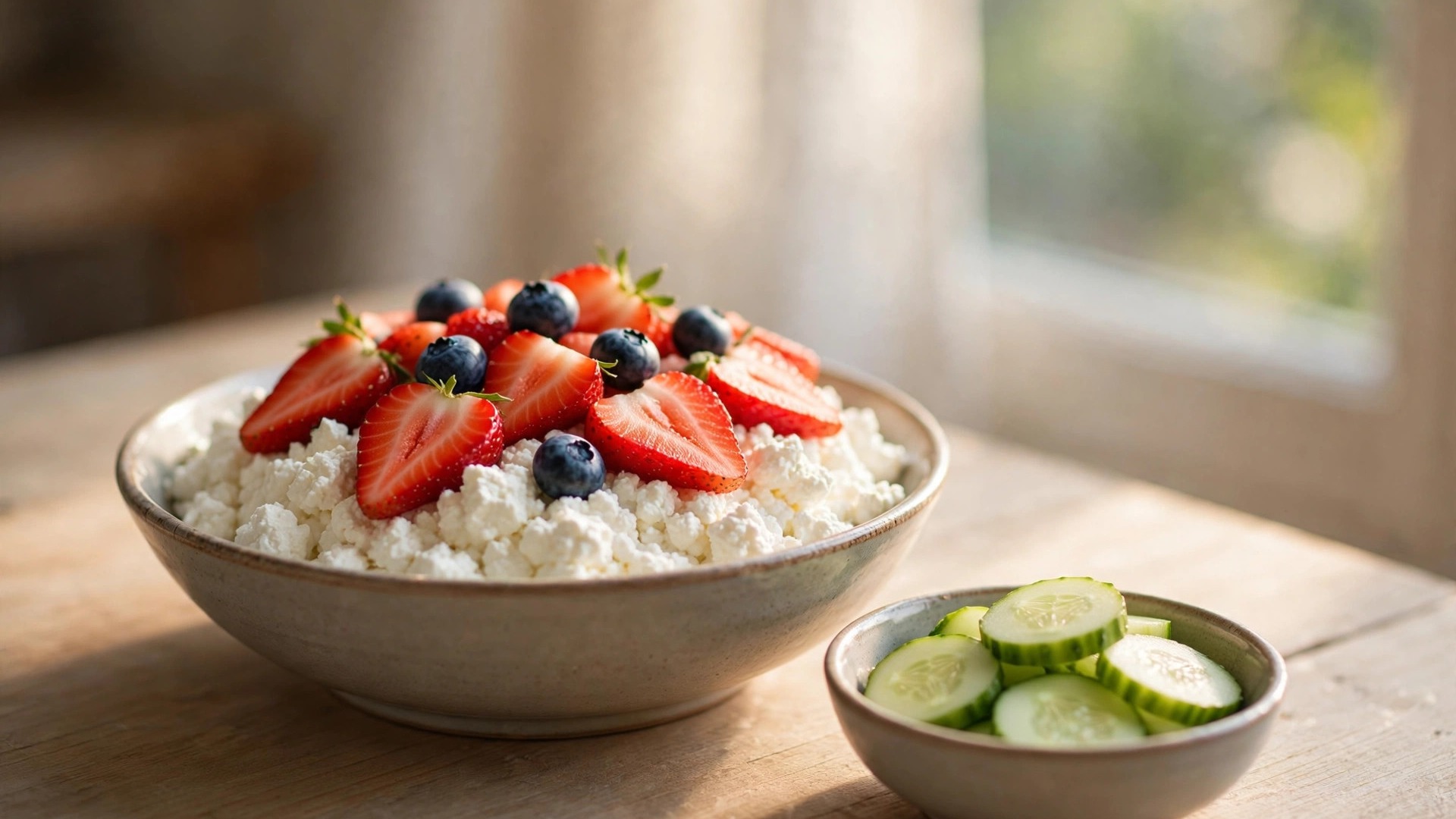
Cottage cheese works in both sweet and savoury meals. The sweet route is the simplest: a half cup with a handful of berries or a sliced peach, plus a spoonful of cinnamon. Berries add fibre and sweetness for very few calories. Skip the honey: it adds sugar without adding fullness.
For a savoury option, try it on wholemeal toast with sliced tomato and black pepper, or with cucumber and cherry tomatoes. It also works stirred into scrambled eggs, where it melts slightly and adds protein. Blended smooth, it makes a high protein dip or spread, and blending also helps if you dislike the curd texture.
A half cup with salad and a slice of wholemeal bread makes a filling lunch of roughly 250 to 300 calories. For an evening snack, a half cup with berries is usually enough to stop late-night grazing, because the casein digests slowly. Measure the half cup first, then build the meal around it.
The Mistakes That Undo the Benefit
The most common mistake is treating the tub as a serving. A standard tub holds about 2 cups, so eating the whole tub gives you about 325 calories and about 56 grams of protein, four servings at once, which is a meal-sized amount of calories eaten as if it were a snack. Spoon it into a bowl, put the tub away, and eat from the bowl.
The second mistake is pairing it with high calorie extras: cottage cheese with jam, honey, granola or crackers can double the calories of the snack while adding almost no protein. Keep the extras to fruit, vegetables, herbs and spices.
The third mistake is buying flavoured tubs without reading the label, and the fourth is eating it daily without watching the salt. If you notice bloating, or if your blood pressure is a concern, talk to your doctor about how much cottage cheese fits your diet, and consider alternating it with plain Greek yogurt, which has far less sodium. Get the portion right and keep it plain, and cottage cheese earns its place in a weight loss diet.
Related reading: Can You Eat Too Much Greek Yogurt? and Is Greek Yogurt Keto Friendly?
Is Cottage Cheese Good for Weight Loss Frequently Asked Questions
Is cottage cheese good for weight loss?
Yes, when it is plain, low-fat, and eaten in a measured half cup serving. Low-fat cottage cheese gives about 14 grams of protein for about 81 calories per half cup, according to USDA FoodData Central, or about 17 grams of protein per 100 calories, similar to plain nonfat Greek yogurt. It works best as part of a diet with fewer calories than you burn.
How much cottage cheese should I eat for weight loss?
A half cup, about 113 grams, is the standard serving, with about 14 grams of protein for about 81 calories in the low-fat version. A standard tub holds about 2 cups, which is four servings, so spoon your portion into a bowl rather than eating from the tub. One to two servings a day fits most weight loss diets.
Is low-fat or full-fat cottage cheese better for weight loss?
Low-fat is usually the better pick. Low-fat cottage cheese has about 81 calories per half cup, while full-fat creamed cottage cheese has about 111 calories, and the protein is almost the same, about 14 grams against about 13 grams. Full-fat is not a bad food, but low-fat gives nearly the same protein for about 30 fewer calories per serving.
Can I eat cottage cheese every day while losing weight?
Yes, as long as portions are measured and the tub is plain rather than flavoured. Flavoured tubs add sugar and push the calories up, so check the label and add your own fruit instead. The main thing to watch is sodium, since low-fat cottage cheese has about 406 milligrams per 100 grams, so balance it with lower salt foods.
Share this:

Follow HealthSabz on Facebook
Daily keto tips, recipes and healthy eating ideas, posted every day.
Follow HealthSabz