Keto Sweats: Why They Happen and What May Help
You started keto, and now you sweat at odd times of the day. Many new dieters ask about keto sweats during the first weeks. This guide explains what keto sweats are, what may cause them, and which habits may help. Causes differ from person to person, and results vary. This article gives general information, not medical advice. Talk with your doctor before you change your diet, especially if you take medication. For the full picture, read understanding keto sweats: what you need to know.
What Is Sweating on Keto?
Many people report extra sweating after they cut carbs, and online forums call this keto sweats. It is not an official medical term. It describes more sweating that starts after a person begins a ketogenic diet.
What it may feel like
Some people notice damp skin during light activity, while others wake up with wet sheets. A few feel hot after meals, and some notice no change at all. Compare yourself to your own baseline, not to other dieters.
How long it may last
Some people say it eases after a few weeks, and others say it lasts longer. No fixed timeline exists, and results vary. If it bothers you or keeps going, bring it up with your doctor.
What it does not tell you
Sweating alone does not show how well your diet is working, so do not use it to judge your progress. Track other signs, such as your energy, your sleep, and how you feel from day to day.
Why Do I Sweat on Keto? Possible Causes
Experts have not pinned down one cause, and several factors may play a part. Here are the main ideas people discuss.
Your body is adjusting
Keto cuts carbs sharply, and your body may shift toward burning more fat for fuel. Some people think this change affects body temperature and sweating. The link is not fully proven, so treat it as a possible factor, not a rule.
Water and mineral shifts
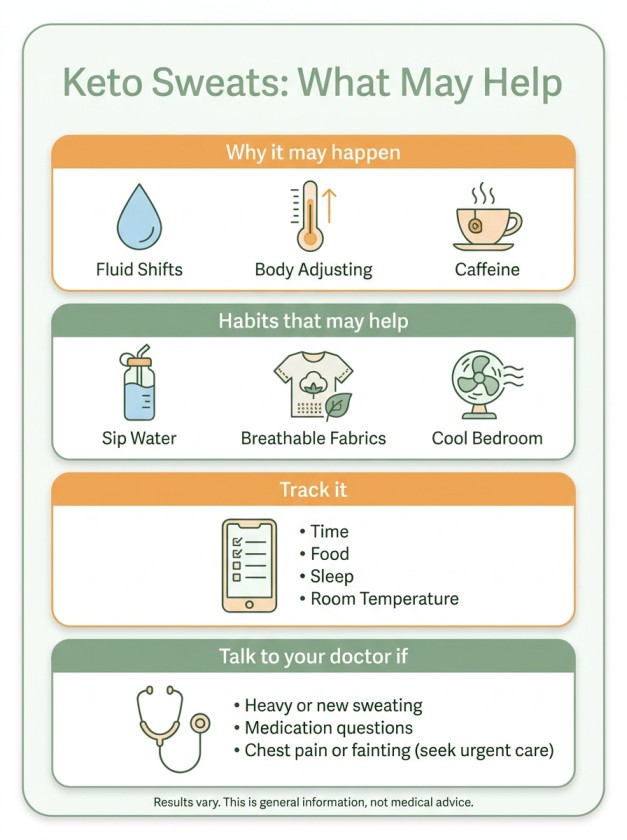
Lower carb intake can change how your body holds water, and you may pass more fluid early on. Minerals such as sodium, potassium, and magnesium may shift too. These changes may affect how you handle heat. If you lose more fluid than you drink, you may feel tired or dizzy.
New food and drink habits
Your food choices probably changed. You may drink more coffee to fight low energy, and caffeine can make some people sweat more. Spicy food can do the same. Check whether your new routine includes these triggers.
More exercise
Many people start moving more when they start a new diet, and workouts raise body heat. If you exercise more now, the workout may explain part of the sweating. Ask your doctor what activity level suits you.
Personal differences
Age, weight, fitness, and climate also shape how much a person sweats. Two people on the same diet can have very different experiences. That is why comparing yourself to others rarely helps.
Causes that have nothing to do with keto
Not every sweat comes from your diet. Warm rooms, stress, and hormone changes can all cause sweating, and so can some medications and health conditions. Thyroid problems and infections are examples. If sweating feels new, heavy, or strange, ask your doctor instead of assuming keto is the cause.
Keto Diet Side Effects That May Show Up With Sweating
Sweating is one of several keto diet side effects people mention, and others often appear in the first weeks. Many people group them under the label keto flu.
Common early symptoms people report
Headache, tiredness, dizziness, nausea, and muscle cramps appear often in these reports. Some people also mention trouble sleeping, constipation, or bad breath. Not everyone gets these symptoms, and some people get none.
Why the overlap matters
Several of these symptoms may link to fluid and mineral balance. If you feel dizzy and sweaty together, pay attention and note when it happens and what you ate. Share those details with your doctor or a registered dietitian.
How to Manage Keto Sweats: Daily Habits
These habits may help you feel more comfortable. None is a guaranteed fix, and results vary, so start with small changes and see what fits your life.
Drink water through the day
Sip water from morning to evening, and keep a bottle where you can see it. Many people use urine color as a rough guide to hydration. Ask your doctor how much fluid suits you, especially if you have heart or kidney conditions.
Look at the minerals in your food
Many keto-friendly foods contain sodium, potassium, or magnesium. Leafy greens, avocados, nuts, seeds, and fish are examples, and broth adds sodium. Read labels and plan your meals around them.
Talk to your doctor before you take mineral supplements. Too much of some minerals can cause harm, and certain conditions and medications change what is safe.
Dress for comfort
Choose breathable fabrics such as cotton, and wear layers you can remove. Keep a spare shirt in your bag or at work. Small steps like these ease the stress of sudden sweating.
Cool your bedroom
If you sweat at night, lower the room temperature and use light bedding. Keep a fan nearby. Change out of damp sleepwear if you wake up wet, since a dry shirt helps you fall back asleep.
Watch your triggers
Notice whether coffee, spicy food, or alcohol makes sweating worse. Cut back on one at a time and see what changes. This way you learn which habit matters most.
Care for your skin
Shower after workouts, and wash sweaty clothes soon after wearing them. Antiperspirants may reduce underarm sweat for some people. A pharmacist can explain the options sold in US stores.
Plan for work and social events
Pack a spare shirt and a small towel for busy days. Pick a cooler seat at meetings and meals when you can. Most people understand sweating, so try not to let it keep you home.
Go slowly
Some people move toward low carb over several weeks instead of overnight. A registered dietitian can help you plan this. Ask what suits your health and goals.
Support sleep and stress
Poor sleep and high stress may raise sweating for some people. Keep a regular bedtime, take short walks, and try slow breathing when you feel tense. These habits also support your overall health.
Track Your Symptoms
A simple log helps you spot patterns, and it gives your doctor useful details.
What to write down
Record the time, the place, and what you were doing. Note what you ate and drank, and add your sleep, stress level, and room temperature. List any medications. Keep it short, since a phone note works well.
How to use your log
Review it after two weeks and look for repeat triggers. Make one change at a time so you can see what helps. Bring the log to your appointment.
When to Talk to a Doctor
Most people can raise sweating at a regular visit. Some signs need faster attention.
Book an appointment if
Sweating is heavy, new, or lasts longer than you expected, or it disrupts your sleep or daily life. Book a visit if you take medication for diabetes or blood pressure. The same goes for pregnancy, nursing, or any health condition. Ask before you start keto, because diet changes can affect how some medications work. Do not change your doses on your own.
Get urgent help if
Seek emergency care for chest pain, trouble breathing, fainting, or confusion. Do the same if sweating comes with a high fever. A racing heartbeat that will not settle also needs prompt care.
Frequently Asked Questions
Are keto sweats normal?
Many people report extra sweating when they start keto, but it does not happen to everyone. Heavy sweating can also have other causes. If you worry, ask your doctor.
How long do keto sweats last?
No set timeline exists. Some people say it fades within weeks, while others say it takes longer. Results vary.
Can drinking more water help?
It may help some people feel more comfortable, but it is not a guaranteed fix. Ask your doctor about the right amount for you.
Should I quit keto if I sweat a lot?
That decision belongs to you and your doctor. Share your log, your symptoms, and your goals. They can help you weigh your options.
Bottomline
Keto sweats can feel odd, but you have options. Track your symptoms, adjust small habits, and give your body time. Results vary, so compare yourself only to your own baseline. Talk with your doctor if sweating is heavy or comes with other symptoms. A short conversation can bring clear answers and peace of mind.