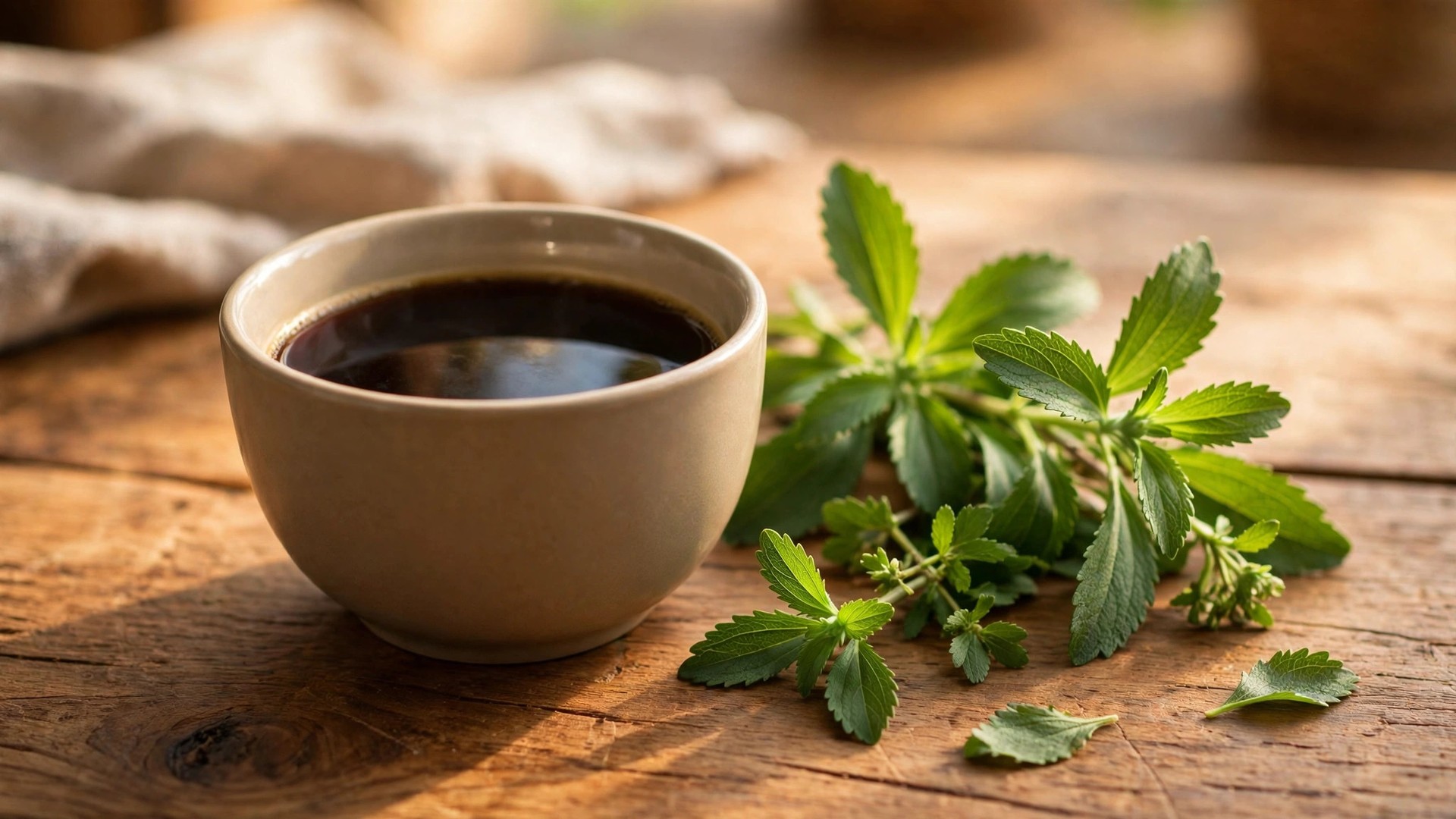
Does Stevia Break a Fast? Pure Stevia vs the Packets With Fillers
No, pure stevia does not break a fast for most people. Pure stevia leaf extract, made of compounds called steviol glycosides, has essentially zero calories and zero carbohydrates, and research so far suggests it does not raise blood sugar or insulin in a meaningful way.
The catch is that the stevia most people buy is not pure stevia. The little paper packets on cafe tables and supermarket shelves are mostly filler, usually dextrose or maltodextrin. Those fillers are real carbohydrates, and they are the part that can break a fast.
What Pure Stevia Actually Is
Stevia is a natural sweetener from the leaves of the Stevia rebaudiana plant. Its sweetness comes from steviol glycosides, mainly stevioside and rebaudioside A, which taste about 200 to 300 times sweeter than sugar. A typical serving of pure liquid stevia extract is about 5 to 7 drops, or about 20 to 50 milligrams.
Steviol glycosides supply no usable calories, and they do not raise blood glucose the way sugar does. In one small study of 34 people with type 2 diabetes, tea sweetened with stevia had no effect on blood sugar, HbA1c, insulin or blood fats over 8 weeks.
The FDA sets the acceptable daily intake at about 4 milligrams per kilogram of body weight, or about 272 milligrams a day for a person weighing about 68 kilograms.
The Packet Problem: Maltodextrin and Dextrose
A packet of pure stevia extract alone would hold a speck of powder too small to pour, so manufacturers bulk it out with a filler, usually dextrose, which is plain glucose, or maltodextrin, a starch based carbohydrate.
Dextrose and maltodextrin are real carbohydrates. A single packet typically contains about 0.5 to 1 gram of carbohydrate, or about 3 to 4 calories, yet the label may still say 0 calories, because FDA rules allow products under 5 calories per serving to declare zero.
Maltodextrin is fast acting, with a glycemic index of about 85 to 110, higher than table sugar at about 65, and dextrose sits at about 100. One packet is unlikely to undo a weight loss fast, but about six packets across a day is about 5 to 6 grams of glucose.
Read the ingredients, not the front of the packet. If the first ingredient is dextrose or maltodextrin, the packet is mostly filler. Liquid drops are the cleanest option, because they need no bulking agent.
How Stevia Compares With Other Sweeteners
The table compares common sweeteners per serving, with figures hedged as about, since brands vary.
| Sweetener, per serving | Calories | Carbs | Fasting verdict |
|---|---|---|---|
| Pure liquid stevia, about 5 to 7 drops | About 0 | About 0 g | Fine for most fasts |
| Pure stevia powder, no filler | About 0 | About 0 g | Fine for most fasts |
| Stevia packet, dextrose or maltodextrin filler | About 3 to 4 | About 0.5 to 1 g | Risky in larger amounts |
| Stevia packet, erythritol filler | About 1 to 2 | About 0 to 1 g | Usually fine, small calories |
| Sugar, 1 teaspoon | About 16 | About 4 g | Breaks a fast |
| Honey, 1 teaspoon | About 21 | About 6 g | Breaks a fast |
Erythritol packets are the better packet choice, with a glycemic index of about 0, though erythritol can cause bloating at higher doses. Sugar and honey figures come from USDA FoodData Central, packet figures from product labels.
Does Your Fasting Goal Change the Answer?
For a weight loss fast, the main question is calories. Pure stevia adds about zero calories, so it does not break the calorie deficit that drives weight loss. A single maltodextrin packet, at about 3 to 4 calories, is unlikely to matter on its own.
For blood sugar or insulin control, the research so far suggests pure stevia does not raise either in a meaningful way. Packets are the risk: maltodextrin has a high glycemic index, so a packet or two could produce a small glucose rise on an empty stomach.
For a strict fast, or a fast aimed at autophagy, be more cautious. Autophagy is the cell clean up process that switches on during fasting, and it is switched off mainly by protein and calories, which activate a pathway called mTOR. Pure stevia delivers neither, so there is no strong mechanism by which it would halt autophagy. Even so, many strict fasters skip all sweeteners.
There is also a behavioural catch. Sweet taste can trigger cravings in some people, and the brain sensing sweetness may prepare the body for sugar, in what is called the cephalic phase insulin response. The evidence for this with stevia is mixed. If sweetened coffee makes you hungrier, the stevia is costing you more than it gives you.
How to Use Stevia During a Fast Without Breaking It
Liquid stevia drops are the simplest safe choice: pure steviol glycosides in water, with no filler to worry about. Look for glycerin free drops. If you prefer powder, buy pure extract with no bulking agent listed.
If you use packets, read the ingredients every time you change brands. Choose packets bulked with erythritol rather than maltodextrin or dextrose, and count each packet as about 0.5 to 1 gram of carbohydrate, even when the label says zero. Keep it to one packet per drink.
Use it in black coffee and plain tea, and do not add milk, cream, or flavoured creamers, since those will break a fast on their own. If sweetened coffee keeps your fast comfortable, pure stevia is working for you. If it leaves you craving sweet food, try a week without it.
Related reading: Does Collagen Break a Fast? and 16:8 Intermittent Fasting for Beginners
Does Stevia Break a Fast Frequently Asked Questions
Does stevia break a fast?
Pure stevia does not break a fast for most people. It has essentially zero calories and zero carbohydrates, and research so far suggests it does not raise blood sugar or trigger a meaningful insulin response.
Do stevia packets break a fast?
They can, depending on the filler. Packets bulked with maltodextrin or dextrose contain about 0.5 to 1 gram of carbohydrate and about 3 to 4 calories each. Several a day add up to about 5 to 6 grams of glucose.
Can I put stevia in coffee while fasting?
Yes, if it is pure stevia. A few drops of liquid stevia in black coffee adds about zero calories and does not raise blood sugar in a meaningful way. Check packet ingredients first, and keep it to one packet per drink. Do not add milk or cream, since those will break a fast on their own.
How much stevia can I use while fasting?
A typical serving is about 5 to 7 drops, or one packet, per drink, or about 20 to 50 milligrams of stevia. The FDA acceptable daily intake is about 4 milligrams per kilogram of body weight, or about 272 milligrams a day for a person weighing about 68 kilograms.
Share this:

Follow HealthSabz on Facebook
Daily keto tips, recipes and healthy eating ideas, posted every day.
Follow HealthSabz