
Is Hot Chocolate Keto? Carbs, Sugar and a Low Carb Version
A regular hot chocolate is not keto. A typical cafe cup made with whole milk and sugar carries about 25 g of carbs, which is more than a whole day of carbs on a strict keto plan. The good news is that the drink itself is easy to fix. Swap the milk and the sugar, keep the cocoa, and a low carb version comes in at about 2 to 3 g of net carbs per cup. It still tastes like hot chocolate, because the flavour was never the problem. The sugar and the milk were.
This post covers the carbs in each kind of hot chocolate, why milk matters more than most people expect, a simple low carb recipe, the sweeteners that work, and what to order at a cafe in December.
The Carbs in a Regular Hot Chocolate
The gap between a regular cup and a keto cup is wide, and the table below shows why. A packet mix looks small and harmless, but it is mostly sugar with a little cocoa added.
| Drink | Serving | Carbs (about) |
|---|---|---|
| Cafe hot chocolate, whole milk and sugar | 240 ml (1 cup) | 25 g |
| Instant cocoa mix, one packet | 1 packet (about 28 g) | 20 to 24 g |
| Homemade, whole milk and 2 tsp sugar | 240 ml (1 cup) | 24 g |
| Homemade low carb version | 240 ml (1 cup) | 2 to 3 g net |
| Dark chocolate, 85%, melted, 2 squares | 28 g | about 4 g net |
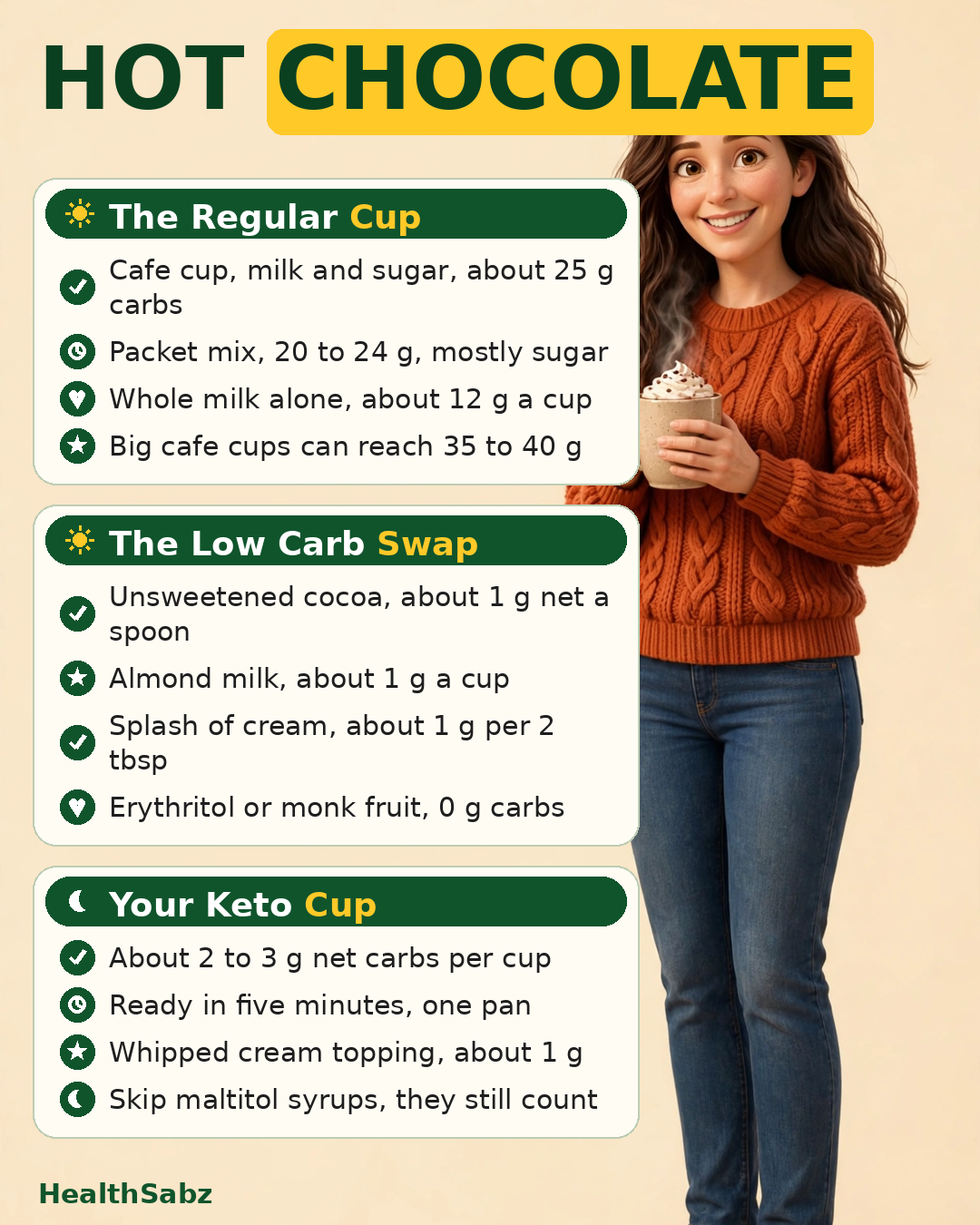 The figures come from USDA FoodData Central and standard product labels, and they are rounded because brands vary. A large cafe cup with whipped cream and a syrup pump can reach 35 to 40 g of carbs, which is a full day of keto carbs in one mug. A packet mix is no better: the first ingredient on most labels is sugar, and one packet carries about as many carbs as two slices of white bread.
The one bright spot in the table is the cocoa itself. Unsweetened cocoa powder has about 1 g of net carbs per tablespoon, so the chocolate flavour is nearly free. Everything that makes hot chocolate a problem comes from what is added to the cocoa.
Why Milk and Sugar Push It Out of Keto
Sugar is the obvious culprit. Each teaspoon of sugar adds about 4 g of carbs, and a standard mug takes two or three teaspoons to taste sweet. That alone is 8 to 12 g of carbs before the milk is counted.
Milk is the quieter problem. Whole milk has about 12 g of carbs per cup, all of it lactose, which is milk sugar. It counts fully toward a keto carb budget, and there is no low carb version of regular milk. Skimmed milk is no help either: it has about the same carbs with less fat. This is why a hot chocolate made with milk can never be keto, no matter how little sugar goes in.
The fix is to change the base. Unsweetened almond milk has about 1 g of carbs per cup. Unsweetened coconut milk from a carton is similar, at about 1 to 2 g per cup. Heavy cream is richer, at about 1 g of carbs per two tablespoons, and a splash of it makes the drink taste far closer to the milky original. A mix of almond milk with a spoonful or two of cream is the closest match most people find.
Chocolate bars need the same care. Milk chocolate is about half sugar by weight, so it has no place in a keto mug. Dark chocolate at 85% cocoa or above works in small amounts, at about 4 g of net carbs per 28 g, and it gives a deeper flavour than cocoa powder alone. Anything below 70% cocoa is usually too sweet to fit.
How to Make a Low Carb Hot Chocolate
This is the version to make at home. It takes five minutes, uses one pan, and lands at about 2 to 3 g of net carbs per cup.
- 1 cup unsweetened almond milk
- 1 tablespoon unsweetened cocoa powder
- 1 to 2 tablespoons heavy cream
- Sweetener to taste, such as erythritol or monk fruit
- A pinch of salt and a few drops of vanilla extract
Warm the almond milk in a small pan over medium heat until it steams, but do not let it boil. Whisk in the cocoa powder a little at a time so it does not clump, then stir in the cream, sweetener, salt and vanilla. Taste it before pouring: cocoa brands vary in bitterness, and an extra pinch of sweetener is easier to add now than after it is in the mug.
The salt matters more than it sounds. A small pinch rounds off the bitterness of the cocoa and makes the drink taste sweeter without adding carbs. Vanilla does the same job from a different direction, adding warmth that the missing sugar used to provide.
Make a double batch and keep it in the fridge and it reheats well for two days. Stir it as it warms, because the cocoa settles to the bottom overnight.
Sweeteners That Work, and One to Skip
Erythritol is the easiest choice for hot drinks. It measures much like sugar, adds no carbs, and dissolves cleanly in hot milk. Monk fruit blends work the same way and are often sold mixed with erythritol. Allulose dissolves well and tastes very close to sugar, though it costs more. Liquid stevia works too, but use it drop by drop, because too much turns bitter fast.
The one to skip is maltitol, which shows up in many sugar free chocolate products and syrups. It is a sugar alcohol, but the body absorbs about half of it as sugar, so it can raise blood sugar and it still counts for roughly half its carbs. Honey, maple syrup and coconut sugar are also out: they are sugar by another name, at about 4 g of carbs per teaspoon, just like the white kind.
If a recipe calls for a sugar free chocolate syrup, read the label before buying. Sucralose based syrups are usually fine for carbs, while maltitol based ones are not.
Toppings, Extras and Cafe Orders
Toppings are where a keto hot chocolate can still feel festive. Whipped cream made from heavy cream has about 1 g of carbs per two tablespoons, so a generous spoonful is fine. Sugar free marshmallows exist and are usually made with gelatin and erythritol, at about 0 to 1 g of net carbs each. A dusting of cinnamon, a drop of peppermint extract, or a pinch of chilli powder all add flavour for no carbs at all.
At a cafe, order with specifics, because a standard hot chocolate is made from a sweetened mix. Ask for unsweetened cocoa powder with steamed unsweetened almond milk, or with half water and half cream, sweetened with your own sweetener if the cafe has none you trust. Some cafes carry sugar free syrups, but ask which sweetener they use before accepting one, since maltitol syrups are common.
The Bottom Line
Hot chocolate is not keto as it is normally made, because whole milk and sugar together put a single cup at about 25 g of carbs. But the drink is one of the easiest Christmas treats to rebuild. Unsweetened cocoa powder is nearly carb free, unsweetened almond milk with a splash of cream replaces the milk, and erythritol or monk fruit replaces the sugar. The low carb version lands at about 2 to 3 g of net carbs per cup, which leaves room for a whipped cream topping and a second mug. Keep the cocoa, change the base, and the December drink stays on the table.
Related reading: Is Eggnog Keto? Carbs in Eggnog and the Low Carb Swap and Keto Christmas Desserts: 10 Low Carb Sweets for the Holiday Table.
Is Hot Chocolate Keto? Frequently Asked Questions
Is hot chocolate keto friendly?
A regular hot chocolate made with milk and sugar is not keto, at about 25 g of carbs per cup. A homemade version made with unsweetened cocoa, unsweetened almond milk, cream and a keto sweetener is keto friendly, at about 2 to 3 g of net carbs per cup.
How many carbs are in a packet of hot cocoa mix?
A standard instant cocoa mix packet carries about 20 to 24 g of carbs, mostly from sugar. Sugar free packets made with sucralose are usually about 4 to 5 g of net carbs, but check the label, because maltitol sweetened versions can be higher.
Can I drink hot chocolate on keto at a cafe?
Yes, if the cafe can make it from unsweetened cocoa powder with steamed unsweetened almond milk or cream, and a sweetener you trust. Most cafes use a sweetened mix by default, so ask for the ingredients before ordering, and skip it if they cannot make an unsweetened version.
What milk is best for keto hot chocolate?
Unsweetened almond milk is the best all round choice, at about 1 g of carbs per cup. A splash of heavy cream adds richness for about 1 g of carbs per two tablespoons. Regular milk, skimmed milk and oat milk are all too high in carbs for keto, at about 12 g or more per cup.