Is Oatmeal Good for Weight Loss? Benefits, Traps and How to Eat It
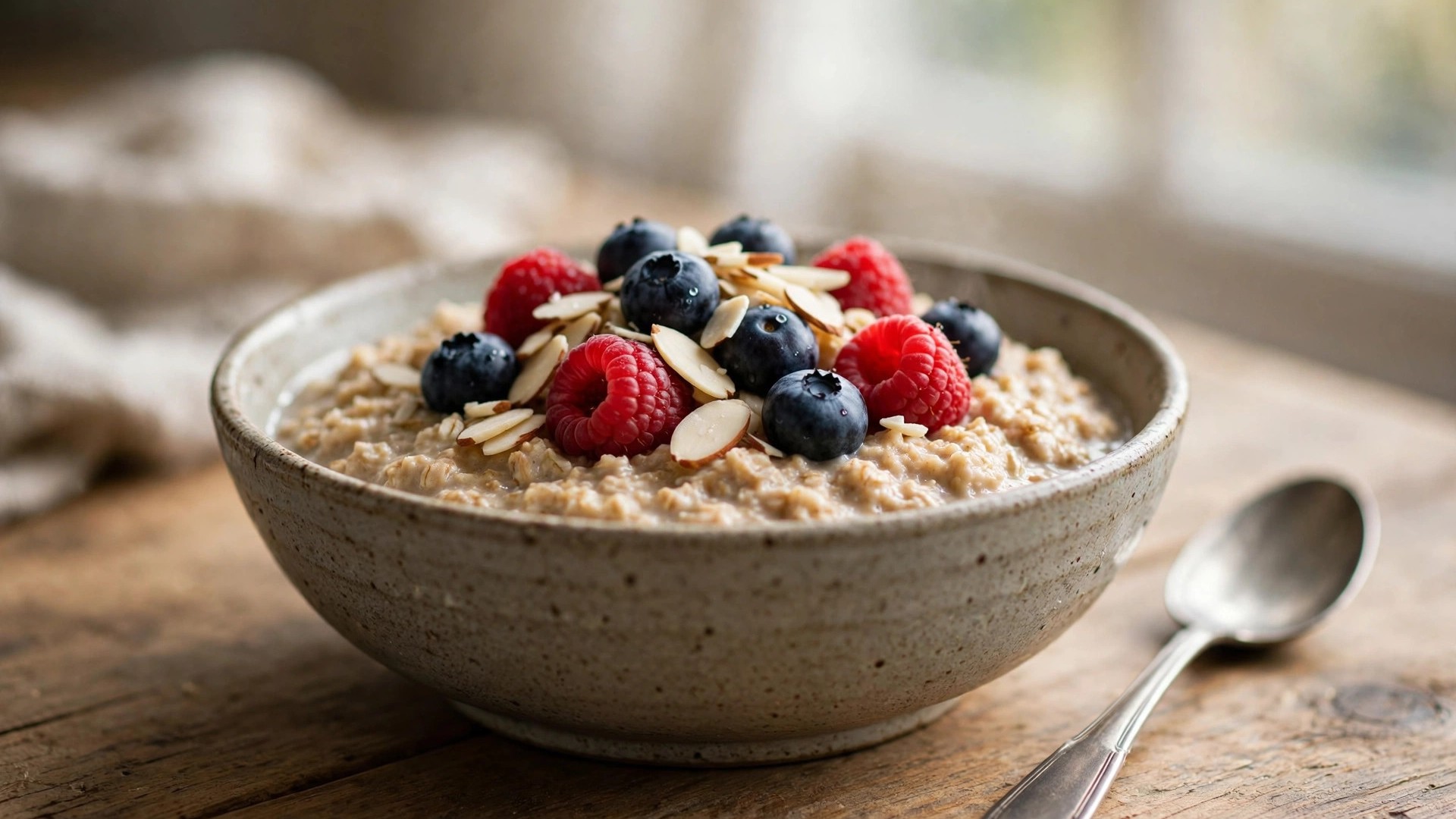
Short answer: yes, plain oatmeal is a genuinely good food for weight loss — but the way most people prepare it decides whether it helps or quietly works against them. Oats themselves are filling, rich in a type of soluble fibre linked to satiety, and modest in calories for the size of the bowl. The traps are the flavoured instant packets loaded with added sugar and the generous toppings — honey, brown sugar, heaped nut butter — that can turn a sensible breakfast into a dessert. Keep the base plain and the toppings measured, and oatmeal earns its healthy reputation.
What a Bowl of Oatmeal Actually Contains
Start with the plain food. A standard serving of rolled oats — about 40 grams dry, which cooks up into a generous bowl — contains roughly 150 calories, about 5 grams of protein, around 4 grams of fibre and almost no sugar. Oatmeal looks very different depending on how it is prepared, though. Typical servings compare like this:
| Oatmeal, prepared | Calories | Sugar | Fibre | Protein |
|---|---|---|---|---|
| Rolled oats in water (40 g dry) | About 150 kcal | Less than 1 g | About 4 g | About 5 g |
| Steel-cut oats, cooked (1 cup) | About 170 kcal | Less than 1 g | About 4 g | About 6 g |
| Instant oatmeal, plain (1 packet) | About 100–120 kcal | About 0–1 g | About 3 g | About 4 g |
| Instant oatmeal, flavoured (1 packet) | About 160 kcal | About 12 g | About 3 g | About 4 g |
| Rolled oats + honey (1 tbsp) + banana | About 320 kcal | About 28 g | About 5 g | About 6 g |
Two lessons stand out. First, the sweetened instant packet delivers the sugar of a small dessert in a smaller, less filling portion than a plain bowl. Second, the “healthy” bowl with honey and banana is not a bad breakfast — but at around 320 calories it is a full meal’s worth, not the light start many people assume they are eating. Cooking in milk rather than water also adds up: 200 ml of whole milk contributes roughly another 125 calories. None of these numbers make oatmeal a problem food; they simply show that preparation, not the oats, is where the calories hide.
Why Oatmeal Can Help You Lose Weight
Oats contain beta-glucan, a soluble fibre that forms a gel as it digests. That gel slows the emptying of the stomach and the absorption of carbohydrate, and studies suggest beta-glucan may increase feelings of fullness after a meal. In practical terms, many people find a bowl of oatmeal keeps them satisfied through the morning in a way that toast or a sugary cereal does not.
Oatmeal also has a low calorie density. Dry oats absorb several times their weight in water as they cook, so the finished bowl is large and warming but built mostly from water. A big bowl that costs about 150 calories is a useful thing on any weight-loss plan: it lets you eat a proper, sit-down breakfast without spending much of your day’s budget.
There is a steadiness benefit too. Plain oats release their energy slowly — steel-cut and rolled oats have a moderate glycaemic index — which tends to mean even energy and fewer mid-morning cravings than a high-sugar breakfast. And because oatmeal is cheap, quick and consistent, it is easy to make a routine of, and routine is an underrated weight-loss tool.
Where Oatmeal Goes Wrong
The first trap is the flavoured instant packet. Maple, brown sugar, fruit-and-cream and similar varieties typically carry around 12 grams of added sugar in a packet smaller than a plain serving of rolled oats. You get more sugar, less food and a faster return of hunger — the opposite of what the box promises.
The second trap is portion creep. Oats are light and cheap, and it is easy to tip 70 or 80 grams into the bowl instead of 40. That quietly doubles the base to around 300 calories before a single topping lands.
The third trap is toppings. Honey, brown sugar, maple syrup, sweetened dried fruit and granola all add sugar or dense calories in small-looking amounts. Nut butter is nutritious but energy-dense — roughly 95 calories a tablespoon — and the difference between a level tablespoon and a heaped spoon is the difference between a topping and a second meal. None of these foods is forbidden; they simply need to be measured rather than poured.
Steel-Cut, Rolled or Instant: Does the Type Matter?
Somewhat. Steel-cut oats are the least processed — whole oat grains chopped into pieces — so they digest slowest and are generally the most filling per calorie. Rolled oats are steamed and flattened, cook faster, and sit close behind. Instant oats are pre-cooked, dried and milled finer, which makes them the quickest to prepare but also the quickest to digest; their glycaemic index is noticeably higher, and many people find an instant bowl keeps them full for less time.
The practical verdict: plain instant oatmeal is still a reasonable choice if it is the one you will actually eat, especially with protein added. What matters far more is the word “flavoured” — that, not the processing, is where the added sugar lives.
How to Build a Weight-Loss-Friendly Bowl
- Start with about 40 g of dry oats and cook them in water, or half water and half milk, for a filling bowl at a known calorie cost.
- Add protein. Stir in Greek yoghurt, cook with milk, or add a spoon of yoghurt on top. Protein is the nutrient plain oatmeal is short on, and adding it extends fullness.
- Sweeten with fruit, not sugar. Fresh or frozen berries, grated apple or banana slices give sweetness plus fibre; cinnamon and vanilla add flavour for almost no calories.
- Measure the rich toppings. A level tablespoon of nut butter or a small sprinkle of nuts or seeds is plenty.
- Make it a routine you enjoy. Overnight oats, baked oats and the classic hot bowl all work — the best version is the one you will happily eat most days.
Eaten this way, oatmeal can be a daily breakfast without any problem for most people, provided the rest of the day is balanced. It is not a magic food — no single breakfast causes weight loss — but as a filling, fibre-rich, low-cost start to the day, it makes the rest of the day’s eating easier to manage.
Related reading: Is Popcorn Good For Losing Weight? · Does Eating Late at Night Cause Weight Gain? What the Studies Show
Frequently Asked Questions
How many calories are in a bowl of oatmeal?
A standard bowl made from about 40 g of dry rolled oats cooked in water has roughly 150 calories. Cooking in milk adds around 125 calories, and sweet toppings can push a loaded bowl to 320 calories or more.
Is instant oatmeal bad for weight loss?
Plain instant oatmeal is fine — it is slightly less filling than rolled or steel-cut oats because it digests faster, but it has almost no sugar. Flavoured instant packets are the problem: they typically add around 12 grams of sugar to a smaller portion.
Can I eat oatmeal every day and still lose weight?
Yes, for most people. A measured portion of plain oatmeal with protein and fruit is a balanced breakfast that can be eaten daily. Weight loss depends on your total intake across the day, not on any single food.
Does oatmeal keep you full for long?
Longer than most cereals, for most people. Its beta-glucan fibre slows digestion, and the bowl’s volume helps too. Adding protein, such as Greek yoghurt or milk, extends that fullness further.