Is Soup Good for Weight Loss? Best Types, Traps and Tips
Short answer: yes, the right soup is one of the best foods for weight loss — and the wrong soup quietly is not. Broth-based soups packed with vegetables, beans or lean protein deliver a large, satisfying bowl for very few calories, because most of the bowl is water. Studies suggest that starting a meal with a low-calorie soup may even reduce how much you eat overall. But creamy, cheesy soups can carry as many calories as the meal they precede, and many canned soups hide a day’s worth of sodium in two cups. As with most foods, the type of soup decides everything.
Why Soup Is So Filling for So Few Calories
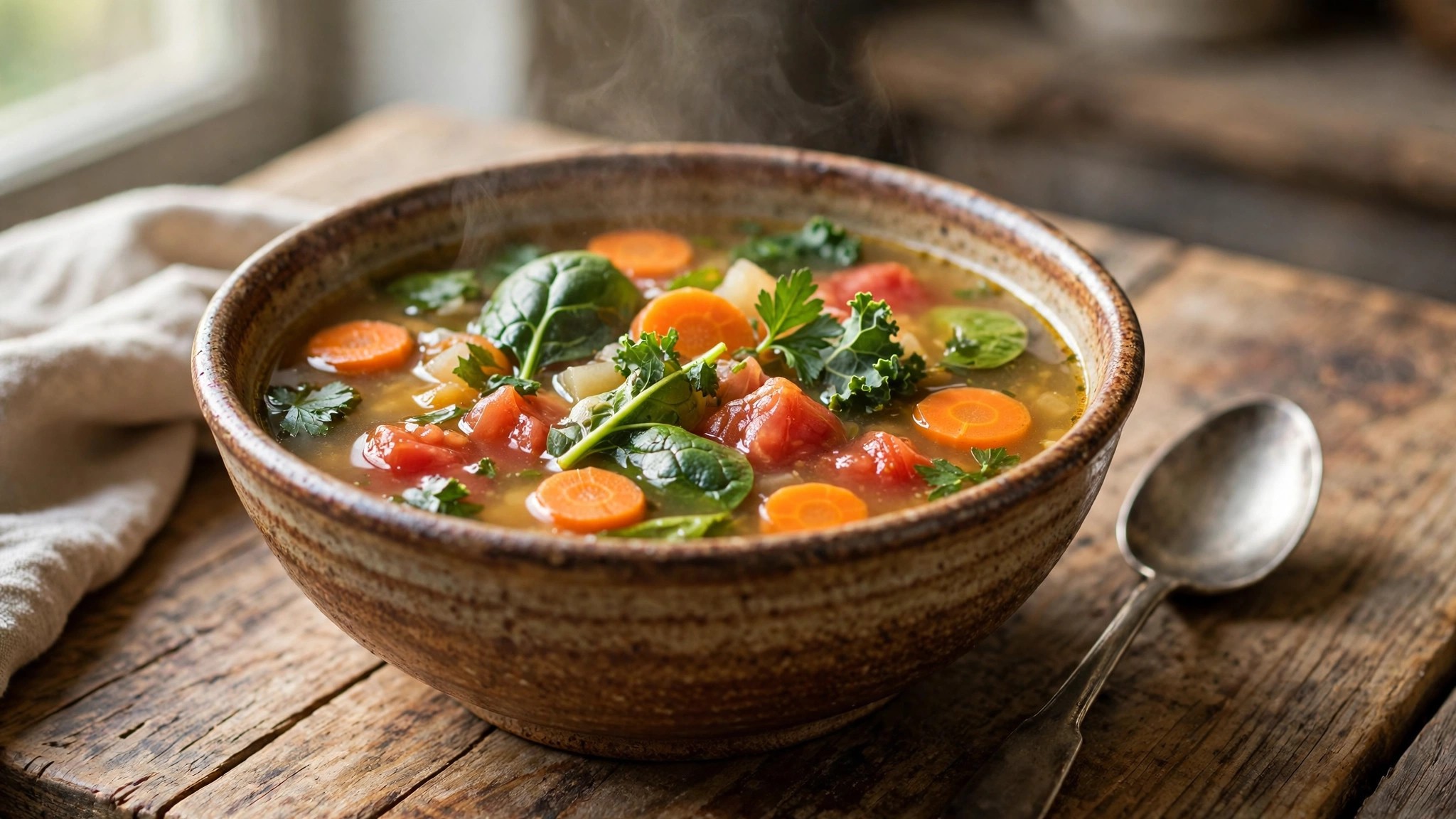
Soup’s advantage is simple physics. Water cooked into food — rather than drunk alongside it — adds weight and volume without adding calories, and research on energy density suggests that this volume is a real part of why a meal feels filling. A cup of broth-based vegetable soup might contain only 50–90 calories, yet it arrives as a full, steaming bowl that takes time to eat.
That eating time matters too. Soup is hot, it is eaten with a spoon, and it cannot be rushed the way a sandwich can. Slower eating gives fullness signals time to register. In controlled studies, people who started a meal with a low-calorie, broth-based soup tended to eat less of the main course that followed and reported feeling just as satisfied — the soup effectively displaced calories rather than adding to them.
There is one honest limit to all this: the effect depends on the soup being low in calories to begin with. A rich starter soup simply adds its calories on top of the meal, which is why the type comparison below matters more than the general idea.
Soup Types Compared
Typical values per cup (about 240 ml). Homemade versions vary with the recipe; canned versions vary by brand, and their sodium is consistently the highest.
| Soup (1 cup) | Calories | Worth knowing |
|---|---|---|
| Clear vegetable soup (broth-based) | About 50–90 kcal | Mostly vegetables and water; very low calorie density |
| Chicken noodle soup | About 60–100 kcal | Some protein (about 3–6 g); canned versions are salty |
| Tomato soup, homemade, no cream | About 90 kcal | Light as made at home; canned and creamy versions run higher |
| Lentil or bean soup | About 160–200 kcal | Higher calories but about 7 g fibre and 9–11 g protein — a real meal |
| Canned vegetable soup | About 90–120 kcal | Calories fine; sodium often 700–900 mg per cup |
| Cream of mushroom or broccoli cheddar | About 200–250 kcal | Cream, butter and cheese drive the calories up fast |
Read the table in two halves. The broth-based soups are so light that a generous bowl can serve as a starter or a snack without denting the day. The lentil and bean soups cost more calories but repay them with fibre and protein, making them legitimate main meals. The creamy soups are not terrible foods — they are simply mislabelled in most people’s minds as “light”, when a cup can equal a small meal before the bread arrives.
When Soup Works Against You
The first trap is the creamy base. Cream, butter and cheese are concentrated calories, and a cheddar or cream soup can reach 200–250 calories a cup — eat two cups with bread and you have had a full meal while believing you chose the light option.
The second trap is canned soup’s sodium. Many canned soups contain 700–900 milligrams of sodium per cup, and a can usually holds two cups. That much salt encourages water retention, which can mask fat loss on the scale for days, and it matters for anyone watching their blood pressure. Some canned tomato soups also add surprising amounts of sugar.
The third trap is what travels with soup: thick slices of white bread for dunking, crackers crumbled in by the handful, or a pastry lid on a pot pie soup. The soup may be light; the meal is not.
Finally, be wary of very-low-calorie “soup diets” built around a single recipe such as cabbage soup. They produce fast early losses that are mostly water, provide too little protein to protect muscle, and are too monotonous to sustain. Soup works best as a normal, enjoyable part of eating — not as a week-long punishment.
What Turns Soup into a Real Meal
A bowl of flavoured water will not hold anyone until dinner. The soups that genuinely support weight loss share a structure: a broth base, a solid protein source, and plenty of vegetables or pulses for fibre and bulk. Chicken, turkey, beans, lentils, chickpeas and split peas all do the protein job; carrots, celery, tomatoes, greens, cabbage and courgette supply volume for almost no calories.
That protein-and-fibre combination is the difference between a starter and a meal. A lentil soup at around 180 calories with roughly 10 grams of protein and 7 grams of fibre will keep most people satisfied for hours, while a clear consommé at 40 calories is best understood as a way to take the edge off hunger before a main course — a useful role, but a different one.
How to Use Soup for Weight Loss
- Use the starter strategy. Begin lunch or dinner with a cup of broth-based vegetable soup; studies suggest you may eat less of what follows without feeling deprived.
- Batch-cook your own. A large pot of vegetable, lentil or chicken soup portions out the week’s lunches with the calories and salt under your control.
- Read canned labels like a sceptic. Check calories per portion — and how many portions the can claims to hold — plus the sodium figure. Broth-based and low-sodium versions are the better buys.
- Build in protein. Add beans, lentils or shredded chicken so the soup functions as a meal, not a prelude to snacking.
- Watch the dunking. If bread comes with it, count it. One slice alongside is a choice; half a loaf is a second meal.
None of this requires a special programme. Soup earns its place in weight loss because it is one of the easiest ways to eat a large, hot, satisfying portion of food for a small number of calories — provided the cream stays out and the salt stays sensible.
Related reading: Is Popcorn Good For Losing Weight? · Does Eating Late at Night Cause Weight Gain? What the Studies Show
Frequently Asked Questions
Can I eat soup every day for weight loss?
Yes, provided the soups vary and are built properly. Rotate the types, include protein-rich versions such as lentil or chicken soup, and keep an eye on sodium if canned soup is a daily habit.
Is canned soup bad for weight loss?
Not automatically — many canned soups are modest in calories. The problems are sodium (often 700–900 mg per cup), occasional added sugar, and creamy varieties. Broth-based, low-sodium cans are the better choice.
Does the cabbage soup diet work?
It produces quick early weight loss that is mostly water, because intake is extremely low. It provides too little protein, is hard to sustain, and the weight typically returns when normal eating resumes. Soup as part of a normal diet works far better.
Will eating soup before a meal really help me eat less?
Studies suggest it can, when the soup is low in calories and broth-based: people tended to eat less of the main course and feel equally satisfied. A creamy soup has the opposite effect, adding substantial calories before the meal begins.